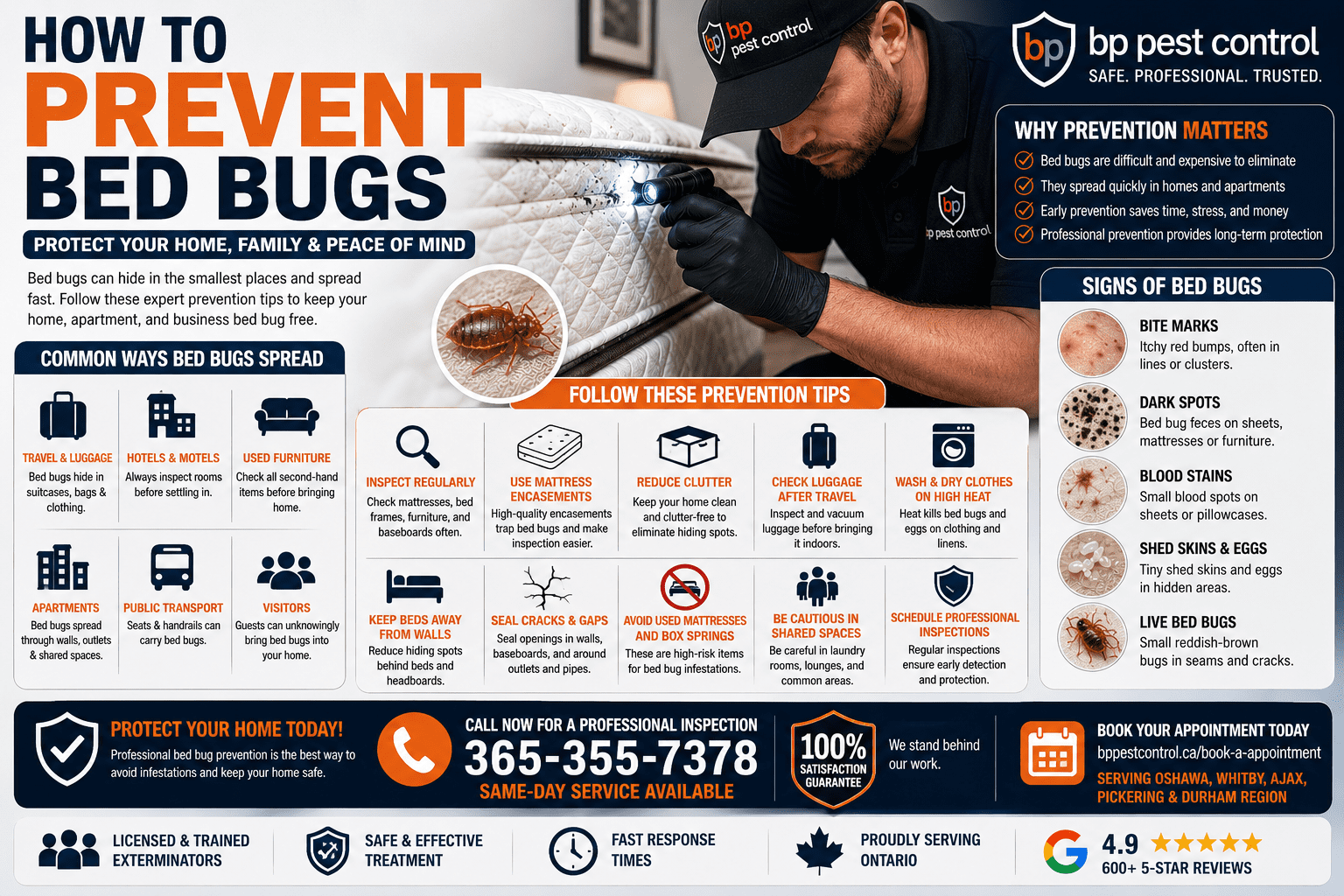
Discovering possible bed bugs in your bedroom can be stressful, particularly when you are unsure where they came from or whether they have spread to other areas. If you are searching for bed bug control Courtice, learning how to identify the signs, locate potential hiding places, and prepare for a professional inspection can help you take informed action.
BP Pest Control provides pest management information and services for residential, commercial, and industrial properties. With more than 20 years of industry experience, BP Pest Control understands the importance of investigating pest concerns and helping property owners understand suitable management options.
Bed bugs are small insects that hide in protected areas around beds, upholstered furniture, and nearby cracks. They can enter a property through luggage, clothing, used furniture, and other belongings. Their presence does not necessarily indicate poor housekeeping, and even clean, well-maintained homes can experience an infestation.
Effective bed bug control Courtice begins with identifying the insect correctly and determining where evidence is present. Whether you live in a detached house, townhouse, condominium, apartment, or rental property, a suitable response should account for the affected areas, the possible extent of the infestation, and the treatment method being considered.
This guide explains common bed bug signs, likely hiding places, preparation requirements, prevention strategies, and how to explore professional bed bug control Courtice options through BP Pest Control.
Why Professional Bed Bug Control Courtice Matters
Bed bugs can hide in small crevices and remain out of sight during the day. Treating only the mattress or the location where an insect was first noticed may leave other hiding places untreated. A comprehensive approach to bed bug control Courtice considers the sleeping area, nearby furniture, physical evidence, and the possible extent of the infestation.
1. Accurate Bed Bug Identification
Not every insect discovered in a bedroom is a bed bug. Other insects can look similar, and skin marks alone cannot confirm an infestation. Correct identification involves considering the insect’s appearance, the physical evidence, and the location where it was found.
When researching bed bug control Courtice, look for an inspection process that considers physical evidence rather than relying only on symptoms or assumptions.
2. Locating Hidden Activity
Bed bugs may hide in mattress seams, bed frames, headboards, screw holes, furniture joints, baseboards, and upholstered furniture. They may also occupy other protected spaces near places where people sleep or rest.
A careful inspection helps identify which areas require attention. An effective bed bug control Courtice plan should not automatically focus on the mattress alone when other hiding places may be involved.
3. Understanding the Extent of the Problem
Finding one bed bug does not establish how extensive the infestation is. Additional inspection may be necessary around the bed, nearby furniture, other sleeping areas, or connected living spaces.
When arranging bed bug control Courtice, explain where the insect or evidence was discovered, how long the issue may have been occurring, and whether you have noticed signs in more than one room.
4. Reducing the Risk of Spreading Bed Bugs
Bed bugs can travel in infested belongings. Moving mattresses, clothing, bedding, or furniture between rooms without appropriate precautions may spread the problem to other areas.
A suitable bed bug control Courtice plan should include clear instructions for handling belongings and preparing affected rooms. Avoid moving potentially infested items into unaffected spaces unless your pest control professional provides instructions for doing so safely.
5. Choosing Appropriate Treatment Options
Bed bug management may involve inspection, physical control measures, cleaning, monitoring, and professional treatment. The appropriate combination depends on the infestation and property conditions.
Ask the provider which treatment methods are being considered, which areas will be addressed, and what safety precautions apply. These details are important when choosing bed bug control Courtice.
6. Preparing Your Property Correctly
Preparation may involve laundering suitable fabrics, organizing belongings, emptying selected furniture, or making areas accessible for inspection. The requirements depend on the treatment method.
Before a bed bug control Courtice appointment, request specific instructions from the service provider. Avoid discarding furniture or applying several pesticides without guidance, as these actions may complicate inspection or create additional risks.
7. Supporting Long-Term Prevention
After treatment, monitoring can help identify any remaining activity. Inspect sleeping areas regularly, check second-hand furniture before bringing it indoors, and examine luggage and belongings after travelling.
Learn more about preventative pest treatments and practical steps that can help reduce recurring pest risks.
Common Signs You Need Bed Bug Control Courtice
Bed bugs can remain hidden, so it is useful to look for several types of evidence rather than relying on one symptom. If you suspect an infestation, inspect the sleeping area and consider professional assistance when physical signs are found.
Live Bed Bugs
Adult bed bugs are small, flat, oval-shaped insects that are generally brownish in colour. Younger bed bugs are smaller and may be harder to see. They can hide in mattress seams, bed frames, headboards, and other protected spaces.
If you find a suspected bed bug, avoid crushing it if you can safely preserve it for identification. A clear photograph or specimen may help when discussing bed bug control Courtice with a professional.
Dark Spots on Mattresses and Furniture
Small dark or brownish spots on bedding, mattress seams, bed frames, or nearby furniture may be associated with bed bug droppings. Similar marks can have other causes, so they should be considered alongside additional evidence.
When checking for bed bug control Courtice, inspect the folds and seams of the mattress, the joints of the bed frame, and nearby furniture rather than examining only the centre of the mattress.
Shed Skins and Eggs
Bed bugs shed their outer skins as they develop. Shed skins and tiny pale eggs may be found in protected hiding places. Because eggs can be difficult to see, inspect seams and narrow crevices carefully.
Finding suspected eggs or shed skins is a reason to investigate further. Professional bed bug control Courtice should account for the possibility that insects may be present in more than one hiding place.
Blood Marks on Bedding
Small reddish or brownish marks on sheets may occur for several reasons, including minor bleeding from irritated skin. These marks alone do not establish that bed bugs are present.
Look for additional physical evidence before deciding what treatment may be necessary. If several signs appear together, consider arranging an assessment.
Unexplained Skin Irritation
Some people develop itchy marks after bed bug bites, while others have little or no visible reaction. Skin irritation can also result from many unrelated causes, so it should not be used as the only way to diagnose an infestation.
If you are concerned, inspect the sleeping area and seek appropriate advice. Physical evidence is more useful for identification than assuming every unexplained mark indicates bed bugs.
Where Bed Bugs Hide in Courtice Homes
Bed bugs often remain close to places where people sleep or rest, although their hiding locations can vary. Knowing where to inspect can help you identify possible activity and prepare for professional bed bug control Courtice.
Mattress Seams and Labels
Inspect mattress seams, piping, folds, labels, and corners. Use a flashlight to look for live insects, eggs, shed skins, and dark spotting. Check accessible areas on both sides of the mattress when practical.
Bed Frames and Headboards
Bed frames may contain joints, screw holes, brackets, cracks, and other small spaces where insects can hide. Wooden frames and upholstered headboards require careful inspection around seams and attachment points.
During bed bug control Courtice, the bed frame and headboard should be considered alongside the mattress because insects may occupy several locations within the sleeping area.
Bedside Tables and Dressers
Inspect furniture close to the bed, including drawer joints, undersides, handles, and cracks. If you find signs of activity, avoid transferring the contents to another room without suitable containment instructions.
Sofas and Upholstered Chairs
Bed bugs can hide around sofas, chairs, cushions, and other furniture where people rest. Check seams, folds, zippers, and places where upholstery meets the frame.
If suspected activity appears on a sofa or another frequently used piece of furniture, mention it when arranging bed bug control Courtice.
Baseboards and Nearby Cracks
Bed bugs may hide in gaps near the bed, including spaces around baseboards, wall trim, and nearby furniture. In some cases, they can be found in other protected areas of the room.
Do not remove electrical faceplates or open electrical equipment unless you have the appropriate expertise. Tell your provider about suspicious signs so these locations can be assessed safely.
How Professional Bed Bug Control Courtice Works
Professional bed bug management should begin with an understanding of the evidence and which areas require inspection. The exact process depends on the property, the infestation, and the selected treatment method.
Step 1: Discuss the Problem
Explain when you first noticed possible bed bug activity, where the evidence appeared, and whether you have seen live insects. Mention previous treatments and any belongings that may have been moved between rooms.
This information helps establish a starting point for bed bug control Courtice and helps determine which areas may need closer attention.
Step 2: Inspect the Sleeping Area
The inspection may include the mattress, box spring, bed frame, headboard, bedside furniture, and nearby areas. Additional locations may be checked depending on the evidence found.
A thorough inspection helps distinguish suspected bed bug activity from other issues and guides the next steps in bed bug control Courtice.
Step 3: Assess Other Potential Hiding Places
If evidence suggests the infestation may extend beyond the bed, the inspection may include upholstered furniture, baseboards, nearby storage areas, or additional rooms. In multi-unit buildings, coordination with property management may also be necessary.
Step 4: Explain Preparation Requirements
Preparation may involve organizing belongings, laundering bedding, emptying selected furniture, or making areas accessible for treatment. Instructions should be provided before work begins and should reflect the method being used.
For successful bed bug control Courtice, follow the specific directions provided by your pest control professional. Avoid using foggers, unregistered pesticides, or products in ways that are not permitted by their labels.
Step 5: Apply Appropriate Treatment
Depending on the circumstances, a professional may use approved treatment methods alongside physical control and preparation measures. Not every property requires the same treatment, and no single method should be assumed suitable for every infestation.
Ask the provider what the treatment involves, which areas will be addressed, and what safety instructions apply.
Step 6: Follow Monitoring and Follow-Up Instructions
Bed bug management may require monitoring or additional visits. Follow-up needs depend on the findings, treatment method, and whether additional activity is detected.
Ask your provider how to report new evidence and what signs should prompt another inspection. Following the recommended process is an important part of bed bug control Courtice.
How to Prepare for Bed Bug Control Courtice
Correct preparation helps make inspection and treatment more practical. Requirements vary, so follow the instructions provided for your specific service instead of relying on a generic checklist alone.
Launder Bedding and Suitable Fabrics
Follow professional instructions for handling sheets, pillowcases, blankets, clothing, and other washable items. Appropriate hot washing and drying may help manage bed bugs on suitable fabrics.
Keep cleaned items separate from potentially infested belongings and store them in clean, sealed bags or containers when advised. These steps can support bed bug control Courtice by reducing the risk of reintroducing insects into prepared areas.
Organize Belongings Carefully
Reduce clutter where possible so the professional can inspect relevant surfaces. Avoid moving loose belongings into unaffected rooms, and ask how items should be bagged or stored before treatment.
Make Affected Areas Accessible
Your provider may ask you to move certain items away from walls or clear access to furniture. Do not dismantle furniture or move heavy objects unless instructed and able to do so safely.
Avoid Unapproved DIY Treatments
Using several pesticides or applying products to surfaces not listed on the label can create safety concerns and may complicate treatment. Never apply a pesticide to a mattress, bedding, people, or pets unless the product label specifically permits that use.
For additional information, consult Health Canada’s guidance on how to get rid of bed bugs safely.
Residential Bed Bug Control Courtice
Bed bugs can affect detached homes, townhouses, condominiums, apartments, and rental units. The appropriate response depends on the extent of the infestation, the property’s layout, and whether nearby rooms or connected units may also be affected.
Detached Homes and Townhouses
In a detached home or townhouse, inspection commonly begins with the sleeping area and nearby furniture. If evidence suggests activity elsewhere, additional rooms may need to be inspected.
Do not assume every bedroom is infested, but do not ignore signs in other rooms. A targeted assessment helps determine the scope of bed bug control Courtice for the home.
Apartments and Condominiums
In multi-unit buildings, communication and coordination can be important. If you rent and suspect bed bugs, notify your landlord or property manager promptly. Building management may need to coordinate inspections and treatment according to the circumstances.
Moving belongings into hallways or neighbouring units without suitable precautions can spread the problem. Ask for clear instructions before relocating furniture or personal items.
Rental Properties
Tenants should report suspected bed bug activity to their landlord or property manager and cooperate with appropriate inspection and preparation instructions. Responsibilities can depend on the circumstances and applicable Ontario requirements.
Professional bed bug control Courtice should be coordinated with the people responsible for arranging access and addressing the affected property.
Bedrooms and Children’s Rooms
When a bedroom is affected, follow the professional’s guidance about bedding, toys, clothing, and personal items. Do not apply pesticides to children’s belongings or sleeping surfaces unless the product label specifically permits that use.
Keep children and pets away from treatment areas for the period specified by the professional and product instructions.
Learn more about residential pest control and home pest management options through BP Pest Control.
Commercial Bed Bug Control Courtice
Bed bugs can affect commercial and shared-use properties, including offices, accommodation facilities, waiting areas, and other places where people sit or rest. Suspected activity should be investigated to determine the source and extent of the problem.
Offices and Staff Areas
Office chairs, upholstered seating, staff rooms, and personal belongings may require inspection when evidence is discovered. Avoid assuming that an entire workplace is infested based on a single unconfirmed report.
Accommodation and Guest Areas
Businesses that provide sleeping accommodation should have procedures for reporting suspected bed bug activity, inspecting affected areas, and managing potentially infested items. Prompt investigation can help determine the appropriate response.
Commercial Furniture and Shared Seating
When bed bug evidence is found in shared seating, the affected furniture and surrounding area should be assessed. Moving furniture between rooms before inspection may spread insects and make the source harder to identify.
Industrial and Multi-Use Properties
Large properties may contain staff rooms, offices, rest areas, and storage spaces with different inspection requirements. The treatment approach should reflect the use of each area and any relevant safety considerations.
Businesses can explore commercial pest control and industrial pest control for more information about pest management in business environments.
7 Ways to Help Prevent Bed Bugs in Courtice
Prevention cannot guarantee that bed bugs will never enter a property, but careful habits can help identify potential problems earlier and reduce opportunities for insects to spread.
1. Inspect Second-Hand Furniture
Carefully inspect used mattresses, bed frames, sofas, chairs, and other upholstered furniture before bringing them indoors. Avoid taking discarded mattresses or sofas from the curb because their condition and history may be unknown.
2. Check Luggage After Travelling
Inspect luggage and belongings after returning from a trip. Pay attention to seams, pockets, and other folds where insects might hide. Keep luggage away from sleeping areas while checking it.
3. Inspect Sleeping Areas Regularly
Look at mattress seams, bed frames, headboards, and nearby furniture. Regular inspection may help you notice physical evidence before the problem becomes more extensive.
4. Reduce Clutter Around Beds
Organize items stored beneath beds and around bedroom furniture. Reducing clutter makes it easier to inspect surfaces and access possible hiding places.
5. Vacuum Carefully
Vacuuming can help remove some insects and debris from accessible areas, but it should not be treated as a complete solution for an established infestation. Follow appropriate instructions for safely emptying and cleaning the vacuum after use.
6. Seal Suitable Cracks and Gaps
Repair suitable cracks around baseboards, furniture, and other building surfaces where practical. Sealing gaps may reduce hiding places, although it cannot replace inspection and treatment when bed bugs are already present.
7. Seek Professional Advice When Evidence Appears
If you discover live insects, suspected eggs, shed skins, or repeated dark spotting around sleeping areas, arrange an assessment rather than relying on home remedies alone.
These prevention steps can support bed bug control Courtice by helping you identify possible activity, protect belongings, and respond appropriately to suspected infestations.
For further advice, read Health Canada’s guidance on preventing a bed bug infestation.
How to Choose a Bed Bug Exterminator in Courtice
Choosing a pest control provider is an important decision. Compare the service details and ask questions so you understand the proposed inspection, treatment, safety precautions, and follow-up process.
Experience With Bed Bug Infestations
Ask whether the provider handles bed bug inspections and treatments and how the service is adapted to different property types. The treatment recommendation should be based on inspection findings and the circumstances of the infestation.
Clear Inspection and Treatment Details
A provider should explain which areas will be inspected, what evidence was found, and which treatment options may be appropriate. Ask whether monitoring or additional visits could be required.
Applicable Licensing and Safety Practices
Verify applicable qualifications and licensing for the work being offered in Ontario. Ask about preparation requirements, pesticide use, and instructions for people and pets before and after treatment.
Customer Reviews
Customer feedback can help you evaluate communication and service experiences. Reviews should be considered alongside the provider’s qualifications, treatment plan, and suitability for your property.
Read available feedback for BP Pest Control through its Google reviews or visit its Google business search results.
Transparent Service Information
Ask what is included in the proposed service, how preparation should be completed, and whether follow-up may be necessary. Treatment costs and requirements can vary with the property, the extent of activity, and the methods used.
Why Consider BP Pest Control for Bed Bug Control Courtice?
If you are researching bed bug control Courtice, it helps to choose a provider whose service information allows you to understand the available options. BP Pest Control has more than 20 years of industry experience and provides pest management information for residential, commercial, and industrial properties.
More Than 20 Years of Industry Experience
Experience can help a pest control professional recognize signs of pest activity, inspect likely hiding places, and explain suitable management options. Every infestation is different, so the recommended approach should reflect the conditions found at the property.
Residential and Commercial Service Information
Bed bug concerns can affect homes, rental properties, and businesses. Explore residential pest control, commercial pest control, and industrial pest control to learn more about the company’s service categories.
Inspection and Prevention Resources
Identifying the extent of an infestation is an important step in planning appropriate pest management. Visit the pest control inspection page and explore preventative pest treatments for additional information.
Customer Feedback and Contact Information
Before making a decision, review available feedback and ask questions about the service relevant to your property. Visit the Google reviews for BP Pest Control and use the company’s contact page to discuss your concerns.
Frequently Asked Questions About Bed Bug Control Courtice
1. How Do I Know If I Have Bed Bugs?
Look for live insects, shed skins, tiny pale eggs, or dark spotting around mattress seams, bed frames, headboards, and nearby furniture. Skin marks alone cannot confirm bed bugs. If you find physical evidence, consider arranging an inspection for bed bug control Courtice.
2. Can Bed Bugs Live in a Clean Home?
Yes. Bed bugs can enter clean homes through luggage, clothing, used furniture, and other belongings. Their presence is not proof of poor housekeeping. Correct identification and suitable treatment are more important than assumptions about cleanliness.
3. Do I Need to Throw Away My Mattress?
Not necessarily. Whether an item can be treated depends on its condition, the location of the insects, and the available treatment options. Ask your pest control professional before discarding furniture. If an item must be removed, follow instructions to contain it safely and avoid spreading bed bugs.
4. How Should I Prepare for Bed Bug Treatment?
Preparation depends on the treatment method and property. You may be asked to launder bedding, organize belongings, empty selected furniture, or make areas accessible. Follow the specific instructions provided by your pest control professional.
5. Can Bed Bugs Spread Between Apartments?
Bed bugs may move between nearby areas through belongings and, in some circumstances, building gaps or connected spaces. If you live in an apartment or condominium, report suspected activity to the appropriate landlord or property manager and follow the building’s inspection and preparation instructions.
6. Will One Treatment Always Eliminate Bed Bugs?
Not necessarily. The outcome depends on the infestation, treatment method, preparation, and whether insects remain in hidden areas. Monitoring and follow-up may be recommended. Ask your provider what to expect for your specific situation.
7. Can I Use Store-Bought Pesticides for Bed Bugs?
Use only products registered for the intended purpose in Canada and follow the label exactly. Some products are unsuitable for mattresses, bedding, people, or pets. Avoid unapproved products and foggers that may be ineffective or unsafe.
8. How Do I Contact BP Pest Control?
Visit the BP Pest Control contact page to discuss your pest concerns. Provide details about the suspected insects, where you found evidence, and how long the problem has been occurring.
Contact BP Pest Control for Bed Bug Control Courtice
Bed bugs can be challenging to manage because they hide in small spaces and may spread through infested belongings. If you suspect an infestation, start by checking for physical evidence, avoiding unnecessary movement of belongings, and seeking appropriate advice about inspection and treatment.
BP Pest Control has more than 20 years of industry experience and provides information about pest management for residential, commercial, and industrial properties. If you are looking for bed bug control Courtice, explore the available services and ask about the inspection and preparation steps relevant to your property.
To discuss your pest concerns, visit the BP Pest Control contact page. You can also learn more about pest control inspections, preventative pest treatments, and residential pest control.
For additional customer feedback, visit the Google reviews page or explore BP Pest Control on Google.
When searching for bed bug control Courtice, focus on accurate identification, a clear inspection process, appropriate treatment, and practical prevention guidance. Taking these steps can help you make an informed decision about protecting your home or business.