Bed Bug Treatment Oshawa: Complete Guide to Eliminating Bed Bugs Fast
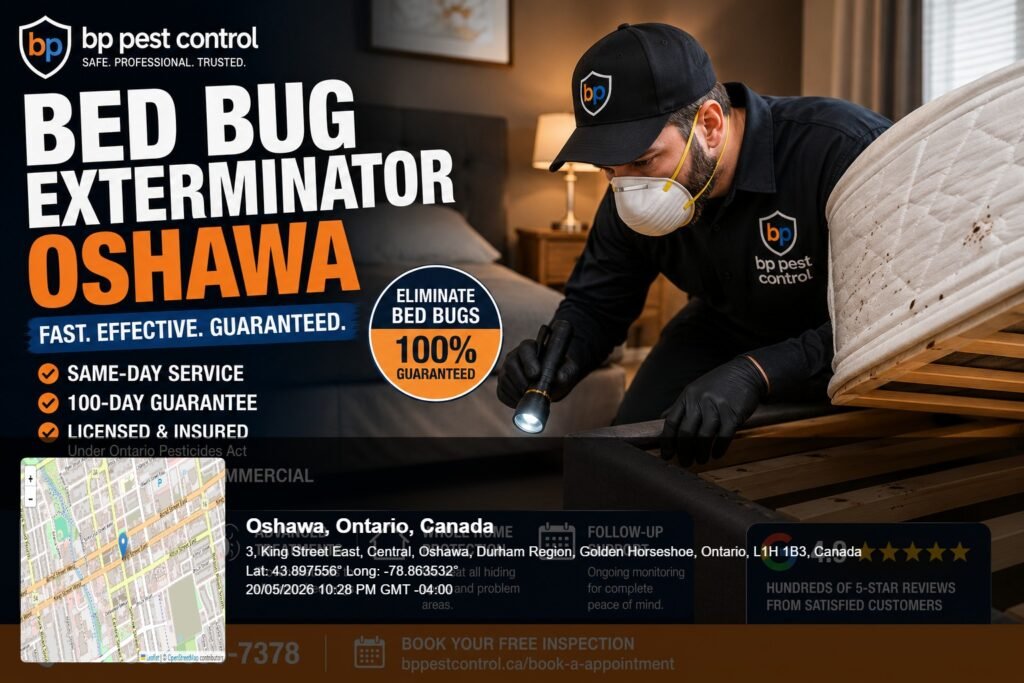
Why Bed Bugs Are Becoming a Growing Problem in Oshawa Bed bugs have become one of the most common pest issues affecting homeowners, renters, hotels, apartment buildings, student housing, and commercial properties throughout Oshawa. These tiny insects can spread quickly from one room to another and often go unnoticed until the infestation becomes severe. Unlike many pests, bed bugs are expert hitchhikers. They can enter your property through luggage, used furniture, public transportation, hotels, workplaces, and even visitors. Once inside, they hide in mattresses, box springs, furniture, wall cracks, and other small spaces. Professional Bed Bug Treatment Oshawa services are often necessary because bed bugs reproduce rapidly and are extremely difficult to eliminate without specialized treatment methods. Need Professional Bed Bug Treatment in Oshawa? BP Pest Control provides fast, reliable bed bug inspections and treatment solutions throughout Oshawa. ⭐ Trusted by Local Property Owners 📞 Call 416-476-7242 📞 Call 365-355-7378 Signs You Need Bed Bug Treatment Oshawa One of the biggest challenges with bed bug infestations is identifying them early. Common warning signs include: Many Oshawa homeowners mistake these signs for allergies or mosquito bites, allowing the infestation to grow. The earlier bed bugs are identified, the easier they are to eliminate. Schedule Your Inspection Today If you suspect bed bug activity, contact BP Pest Control for a professional inspection. 📞 416-476-7242 📞 365-355-7378 Bed Bug Inspection Oshawa Before any treatment begins, a thorough inspection is essential. Professional bed bug inspections help identify: At BP Pest Control, our technicians inspect: A detailed inspection ensures treatment targets the entire infestation rather than only visible bed bugs. Book a Professional Inspection Early detection can save significant time and money. 📞 416-476-7242 📞 365-355-7378 Bed Bug Exterminator Oshawa Many property owners attempt DIY treatments before calling a professional. Unfortunately, over-the-counter sprays often fail because bed bugs hide in difficult-to-reach areas and can survive without feeding for extended periods. A professional Bed Bug Exterminator Oshawa understands: Professional extermination provides a more comprehensive solution than temporary DIY products. Speak With a Bed Bug Specialist BP Pest Control offers customized treatment plans for homes and businesses throughout Oshawa. 📞 416-476-7242 📞 365-355-7378 Bed Bug Shells and Casings One of the most common signs of bed bug activity is the presence of discarded shells. As bed bugs grow, they shed their outer skin multiple times before reaching adulthood. These discarded skins are commonly referred to as: Finding these remains often indicates an active infestation nearby. Property owners frequently discover them: Identifying these signs early can help prevent a larger infestation. Concerned About Bed Bug Activity? Book a professional inspection with BP Pest Control today. 📞 416-476-7242 📞 365-355-7378 Residential Bed Bug Treatment Oshawa Bed bugs can quickly affect every room in a home. Our residential treatment services help protect: Treatment plans are designed around the severity of the infestation and the property’s unique layout. Homeowners throughout Oshawa trust BP Pest Control to eliminate bed bugs safely and effectively. Protect Your Family From Bed Bugs Call BP Pest Control for professional residential bed bug treatment. 📞 416-476-7242 📞 365-355-7378 Commercial Bed Bug Treatment Oshawa Bed bug infestations can significantly impact a business’s reputation. Commercial properties that commonly experience bed bug issues include: Professional treatment helps businesses protect customers, tenants, and employees while minimizing operational disruption. Commercial Bed Bug Solutions Keep your business protected with professional treatment services. 📞 416-476-7242 📞 365-355-7378 Why Oshawa Property Owners Trust BP Pest Control Property owners throughout Oshawa choose BP Pest Control because of our: ⭐ Professional inspections ⭐ Proven treatment strategies ⭐ Fast response times ⭐ Residential expertise ⭐ Commercial expertise ⭐ Customer-focused service ⭐ Local Oshawa experience ⭐ Commitment to long-term pest prevention Our goal is not only to eliminate existing bed bugs but also to help prevent future infestations. 5-Star Google Reviews The reputation of a pest control company matters when dealing with bed bug infestations. Property owners consistently choose BP Pest Control because of: ⭐ Reliable service ⭐ Professional technicians ⭐ Detailed inspections ⭐ Honest recommendations ⭐ Effective treatment solutions ⭐ Responsive customer support Positive Google reviews reflect our commitment to helping Oshawa homeowners and businesses solve pest problems quickly and professionally. Internal Link Opportunity Within this article, naturally link to: Pest Control Oshawa Anchor Examples: Final Call To Action Don’t let bed bugs take over your home or business. BP Pest Control provides professional Bed Bug Treatment Oshawa services designed to eliminate infestations and restore peace of mind. 📞 416-476-7242 📞 365-355-7378 Book your inspection today and take the first step toward a bed bug-free property. “`html Bed Bug Treatment Oshawa: Complete Guide to Eliminating Bed Bugs Fast Professional bed bug inspection, extermination, prevention, and removal services for homeowners and businesses throughout Oshawa. Serving Oshawa, Whitby, Ajax, Pickering, Courtice, Clarington, Toronto, Vaughan, Richmond Hill, Markham, Mississauga, Brampton, and Aurora. ⭐ Trusted Local Experts | ⭐ 5-Star Google Reviews | ⭐ Residential & Commercial Solutions 📞 416-476-7242 | 📞 365-355-7378 Why Oshawa Property Owners Trust BP Pest Control BP Pest Control has become a trusted name for bed bug treatment and pest management throughout Oshawa and surrounding communities. Our team helps homeowners, tenants, landlords, property managers, hotels, apartment buildings, and commercial businesses eliminate bed bug infestations safely and effectively. With extensive experience handling bed bug infestations across Durham Region and the Greater Toronto Area, we understand the local challenges property owners face and provide customized treatment plans designed for long-term results. Our commitment to customer satisfaction, professional service, and effective pest management has earned us positive reviews from local homeowners and businesses who rely on BP Pest Control for dependable solutions. Need Professional Bed Bug Treatment Oshawa? Don’t allow bed bugs to spread throughout your home or business. Contact BP Pest Control today for a professional inspection and customized treatment plan. BP Pest Control 569 Veterans Rd Oshawa, Ontario L1H 3N6 📞 416-476-7242 📞 365-355-7378 Serving Oshawa, Whitby, Ajax, Pickering, Courtice, Clarington, Toronto, Vaughan, Richmond Hill, Markham, Mississauga, Brampton, and Aurora. “`