Industrial Pest Control: Complete Guide to Industrial Pest Management & Warehouse Pest Control
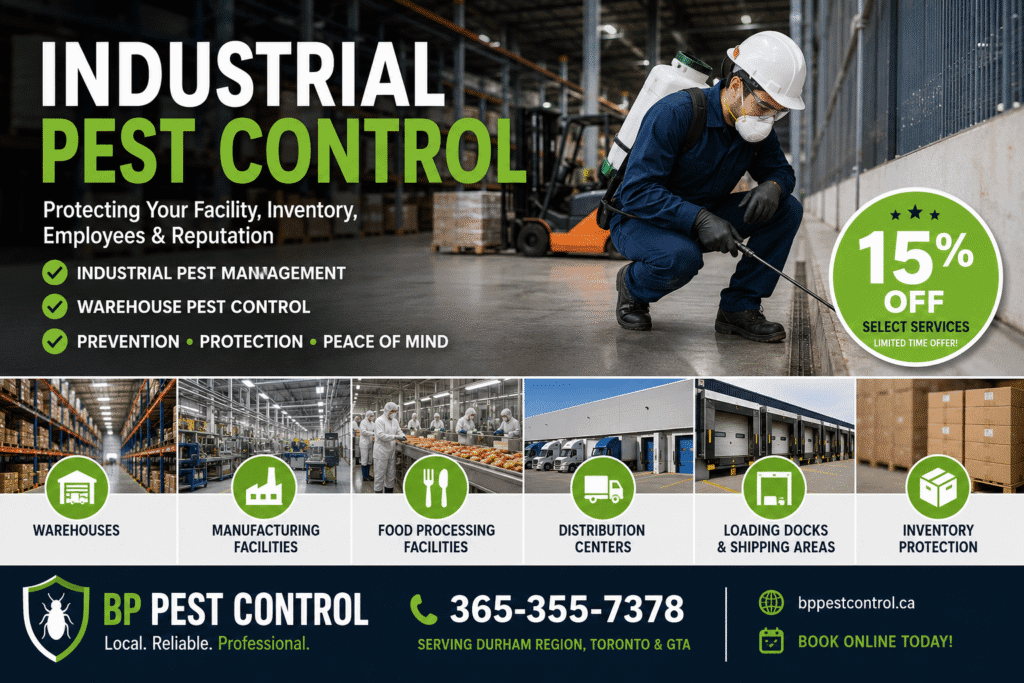
Professional industrial pest control is one of the most important investments industrial property owners, facility managers, warehouse operators, manufacturers, logistics companies, and distribution centers can make to protect operations, inventory, equipment, employees, customers, and long-term profitability. Industrial facilities often face unique pest management challenges because of their size, complexity, storage systems, shipping activity, production operations, and large-scale inventory management. Unlike smaller commercial environments, industrial properties frequently contain thousands of square feet of storage space, loading docks, shipping areas, production zones, employee facilities, mechanical systems, and outdoor infrastructure. These conditions can create ideal environments for rodents, cockroaches, ants, flies, stored product pests, birds, spiders, and other nuisance pests. Professional industrial pest control programs help identify risks, eliminate active infestations, protect valuable assets, maintain operational standards, and support long-term industrial pest management strategies. At BP Pest Control, we provide customized industrial pest control programs for warehouses, manufacturing facilities, logistics centers, food processing operations, industrial properties, and distribution facilities throughout Durham Region, Toronto, and the Greater Toronto Area. 🎉 SAVE 15% OFF INDUSTRIAL PEST CONTROL SERVICES 🎉 Industrial facility managers searching for trusted industrial pest control solutions can currently receive 15% OFF select pest management services from BP Pest Control. Many facility operators choose BP Pest Control after reading our trusted 4.9-star reviews, outstanding customer testimonials, highly rated customer reviews, and trusted local pest control reviews. Why Industrial Pest Control Is Essential Industrial facilities face pest pressures that are often far greater than those found in residential or traditional commercial environments. Constant shipping activity, loading docks, incoming inventory, employee traffic, food sources, moisture conditions, and structural complexity all contribute to increased pest risks. Professional industrial pest management helps facilities: Common Pests Affecting Industrial Facilities Professional industrial pest control programs address a wide variety of pests that commonly affect warehouses, manufacturing facilities, logistics centers, and industrial properties. Rodents Rats and mice remain among the most destructive pests affecting industrial facilities. Rodents can damage wiring, contaminate inventory, destroy packaging materials, and create serious sanitation concerns. Cockroaches Cockroaches frequently establish themselves in employee areas, break rooms, production spaces, utility rooms, and food-related environments. Stored Product Pests Stored product pests can damage inventory, contaminate products, and create major financial losses for warehouses and distribution facilities. Flies Flies often become a concern around loading docks, waste handling areas, food processing environments, and shipping facilities. Ants Ant infestations can affect office areas, production spaces, storage rooms, and food processing facilities. Birds Bird activity around industrial properties can create sanitation concerns and structural maintenance issues. Spiders Large industrial facilities frequently experience spider activity due to abundant harbourage locations and insect prey populations. Industrial Pest Management Programs Professional industrial pest management focuses on long-term protection rather than reactive treatment. Facilities that invest in ongoing pest management programs often experience fewer infestations, lower treatment costs, and improved operational efficiency. Comprehensive industrial pest programs typically include: Warehouse Pest Control Professional warehouse pest control remains one of the most important components of industrial pest management. Warehouses frequently provide ideal environments for rodents and other pests because of their size, storage practices, shipping activity, and inventory systems. Warehouse environments commonly contain: Professional warehouse pest control programs help identify vulnerabilities before infestations affect operations. Loading Dock Pest Risks Loading docks remain one of the most common entry points for pests. Continuous movement of goods, equipment, pallets, and vehicles increases exposure to pest activity. Common loading dock risks include: Manufacturing Facility Pest Control Manufacturing facilities often require highly specialized industrial pest control programs because production environments must remain protected from contamination, product loss, and operational disruptions. Professional programs focus on: Distribution Center Pest Management Distribution centers experience constant inventory movement, shipping activity, receiving operations, and employee traffic. These conditions increase pest exposure and make ongoing industrial pest management essential. Common distribution center concerns include: Call 365-355-7378 TodayVisit BP Pest ControlRead Our 4.9-Star ReviewsBook Online: Request Service Online Food Processing Facility Pest Control Professional industrial pest control is absolutely critical for food processing facilities. These environments handle raw ingredients, packaged goods, production equipment, storage systems, and finished products that must remain protected from contamination. Even a minor pest issue can create serious concerns regarding product quality, food safety, customer confidence, regulatory compliance, and operational efficiency. Professional industrial pest management programs help food processing facilities identify vulnerabilities, reduce pest pressures, maintain sanitation standards, and protect production systems year-round. Food processing facilities commonly face risks from: Comprehensive inspections help identify conditions that support pest activity before infestations affect production operations. Warehouse Pest Control Deep Dive Professional warehouse pest control remains one of the most requested industrial services because warehouses often contain conditions that support ongoing pest activity. Large storage areas, inventory movement, receiving operations, loading docks, packaging materials, and employee activity create opportunities for pests to enter and establish themselves. Warehouses often experience: Professional warehouse pest control programs focus on monitoring, inspections, prevention, sanitation recommendations, and rapid response to emerging pest issues. Rodent Control in Industrial Facilities Rodents remain among the most destructive pests affecting industrial environments. Rats and mice can damage equipment, contaminate inventory, destroy packaging materials, chew electrical wiring, and create serious sanitation concerns. Professional industrial pest control programs focus on: Because industrial properties often contain extensive structural systems and storage areas, proactive rodent management remains essential. Manufacturing Facility Pest Management Manufacturing operations require highly specialized industrial pest management because pest activity can affect production schedules, inventory, employee safety, equipment performance, and product quality. Professional programs are customized based on: Preventative inspections help identify concerns before they impact production operations. Distribution Center Protection Distribution centers experience constant movement of inventory, vehicles, employees, pallets, and shipping materials. This creates numerous opportunities for pests to enter facilities and establish populations. Professional industrial pest control programs help distribution centers protect: Regular inspections and monitoring programs remain essential for long-term success. Industrial Pest Prevention Services One of the most important aspects of professional industrial pest management is prevention. Preventing infestations is often significantly less expensive than treating established pest populations. Professional prevention programs commonly include: Facilities that invest in prevention often