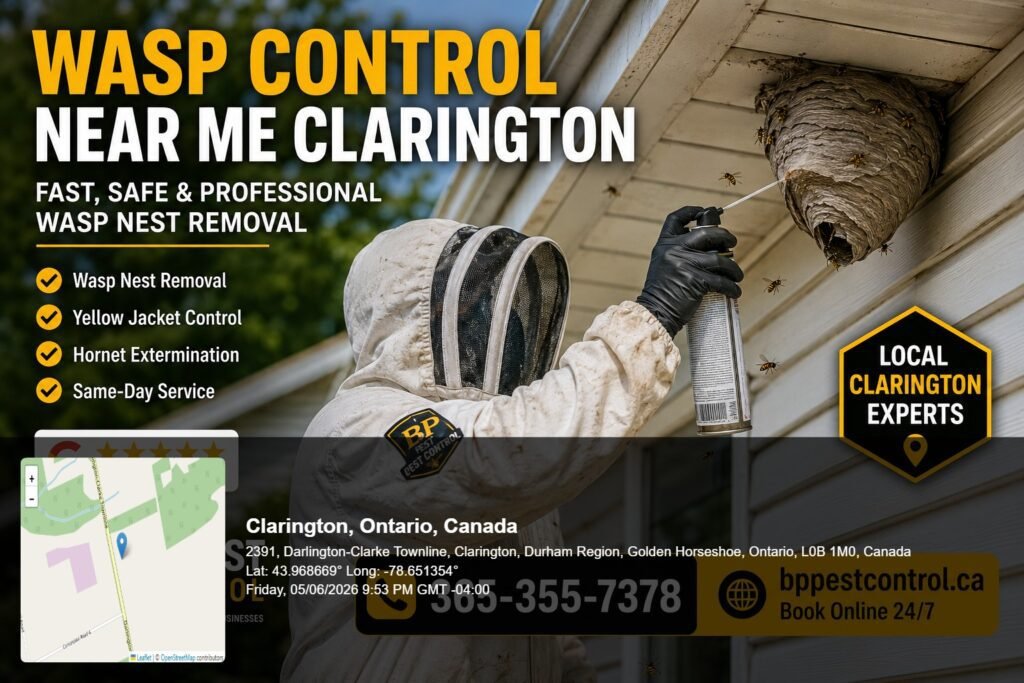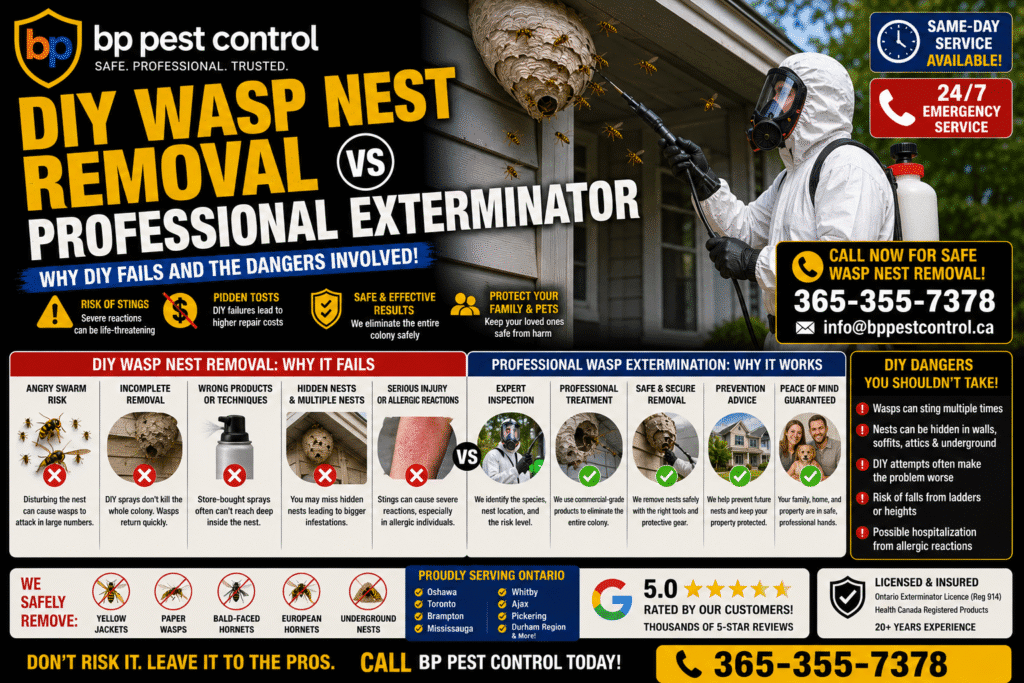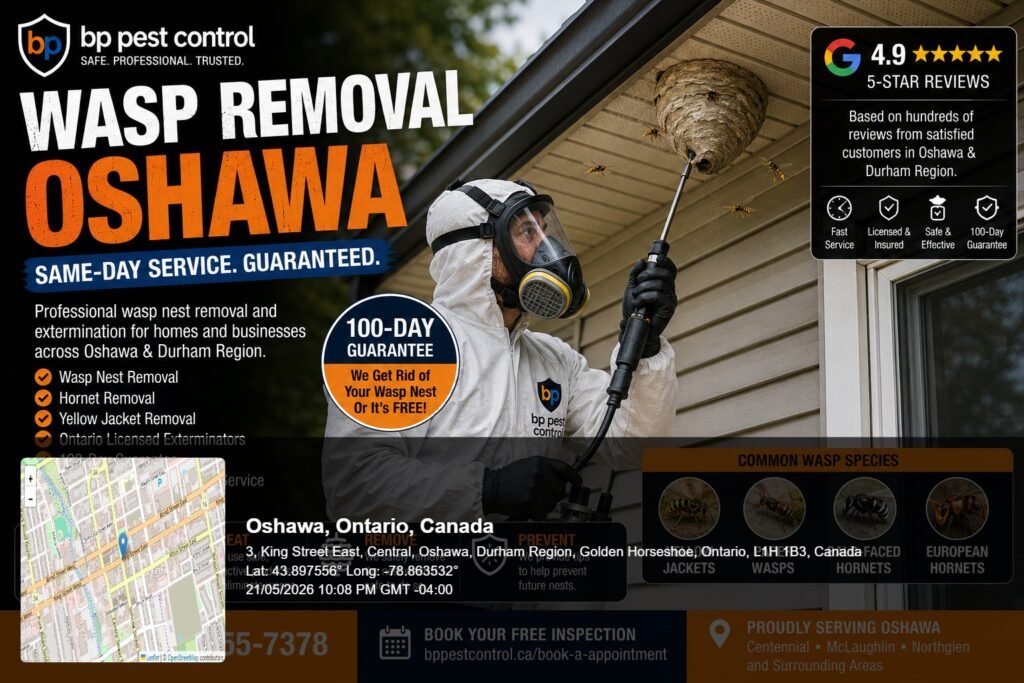
wasp nest removal Oshawa

Wasp Nest Removal Pickering technician removing a wasp nest from a residential property
Pest Control Services, Wasp & Hornet Control, Wasp Control, wasp nest removal, wasp nest removal Oshawa, Wasp Removal

10 Signs You Have a Hidden Wasp Nest on Your Property

A Hidden Wasp Nest is one of the most dangerous pest problems a homeowner can face because the colony often remains unnoticed until it has grown to hundreds or even thousands of aggressive worker wasps. Unlike exposed paper wasp nests, hidden nests are built inside wall cavities, attics, soffits, roof spaces, decks, sheds, chimneys, and underground voids where they can expand without being disturbed. By the time most homeowners realize they have a problem, the colony has already reached a size where professional removal is the safest solution. If you’ve noticed more wasps around your home but can’t find where they’re coming from, there’s a good chance you have a Hidden Wasp Nest. Wasps rarely fly randomly. Worker wasps travel directly between their nest and nearby food or water sources, often following the same flight path dozens of times each day. Repeated wasp activity around one section of your home is often the biggest warning sign that a hidden colony is nearby. Many people mistakenly believe they would easily spot a wasp nest if one existed on their property. Unfortunately, wasps are incredibly skilled at finding concealed nesting locations. They only need a tiny opening around your roofline, siding, soffit, attic vent, or foundation to establish an entire colony completely out of sight. At BP Pest Control, hidden wasp nests are one of the most common problems we discover during professional inspections. Homeowners often call us because they’re seeing increased wasp activity, hearing buzzing inside walls, or finding wasps inside their home without knowing where they originated. Our trained technicians locate hidden colonies, identify the wasp species, and safely eliminate the infestation before it becomes an even greater safety risk. ⭐ Read Our 5-Star Google Reviews What Is a Hidden Wasp Nest? A Hidden Wasp Nest is any wasp colony built inside an enclosed or difficult-to-see location. Unlike exposed nests hanging from trees or roof overhangs, hidden nests remain protected from weather and predators, allowing colonies to grow rapidly. These concealed nests commonly occur in: Because these locations provide warmth, shelter, and limited disturbance, they are ideal nesting environments for queen wasps beginning new colonies each spring. Why Hidden Wasp Nests Are Dangerous A Hidden Wasp Nest is often more dangerous than a visible nest because homeowners unknowingly get close to the colony. Simple activities like mowing the lawn, opening a shed door, sitting on a deck, or entering an attic can disturb the colony and trigger hundreds of defensive worker wasps. Unlike honeybees, many wasp species can sting repeatedly without dying. Multiple wasps may attack simultaneously if they believe the nest is threatened. Hidden nests also continue growing for months because they remain undetected. By late summer, colonies may contain several hundred or even several thousand worker wasps. 10 Signs You Have a Hidden Wasp Nest 1. You See Wasps Flying to the Same Location The clearest sign of a Hidden Wasp Nest is repeated wasp traffic to one area of your property. Watch carefully to see whether wasps repeatedly disappear behind siding, enter roof vents, fly beneath soffits, or disappear under decks. 2. Increased Wasp Activity Around Your Home If you’re suddenly seeing dozens of wasps around your home every day, there’s a strong chance a nearby colony has reached maturity. Increased activity usually indicates worker wasps are actively searching for food. 3. Buzzing Sounds Inside Walls One of the most overlooked warning signs is hearing faint buzzing behind drywall or ceilings. Large colonies inside wall cavities often produce a noticeable humming sound, particularly during warm afternoons. 4. Wasps Are Entering Small Openings Watch for wasps entering: Even openings less than half an inch wide are large enough for worker wasps. 5. You Find Wasps Indoors Finding wasps inside your home may indicate a Hidden Wasp Nest inside your walls or attic. Worker wasps occasionally enter living spaces through small openings around light fixtures, vents, electrical outlets, or ceiling penetrations. 6. Aggressive Behaviour Near One Area Wasps become defensive when people approach their nest. If aggressive behaviour consistently occurs around one section of your yard, a hidden colony may be located nearby. 7. You Notice Activity Around Your Roofline Roof overhangs, fascia boards, soffits, and roof vents are among the most common nesting locations. Frequent activity near these structures should never be ignored. 8. Wasps Keep Coming Back Every Year If recurring wasp problems occur each summer, your property likely offers ideal nesting conditions. Although old nests are not reused, newly emerged queens often choose similar protected locations nearby. 9. You Discover Small Pieces of Nest Material Paper wasps and hornets build nests using chewed wood fibers mixed with saliva. Small gray paper-like fragments around entry points sometimes indicate active nest construction. 10. You Cannot Find the Nest Ironically, the inability to locate the colony is often the biggest sign of a Hidden Wasp Nest. If wasps are everywhere but no visible nest exists, professional inspection is recommended. Where Professionals Commonly Find Hidden Wasp Nests At BP Pest Control, our technicians routinely locate hidden colonies in areas homeowners rarely inspect. Learn more about our Professional Pest Inspection Services, where our experienced technicians identify hidden nesting sites before colonies become larger and more dangerous. Professional Hidden Wasp Nest Inspections Finding a Hidden Wasp Nest requires experience, knowledge of wasp behaviour, and careful inspection techniques. BP Pest Control performs detailed property inspections throughout Durham Region, Toronto, and the GTA to locate concealed colonies safely and accurately. Our inspections include rooflines, attics, soffits, garages, sheds, wall cavities, crawl spaces, decks, trees, and other high-risk nesting areas, allowing us to identify the source of recurring wasp activity and recommend the safest removal solution. How to Prevent a Hidden Wasp Nest Preventing a Hidden Wasp Nest starts with making your property less attractive to queen wasps before nesting season begins. Early spring is the best time to inspect your home for potential nesting locations and repair small openings that could allow wasps to establish a new colony. Regular maintenance combined with professional

where wasps build nests
Pest Control Services, Wasp & Hornet Control, Wasp Control, wasp nest removal, wasp nest removal Oshawa, Wasp Removal

9 Reasons Wasps Keep Coming Back to Your Home Every Year

If Wasps Keep Coming Back to your home every spring and summer, you’re not imagining things. Many homeowners throughout Durham Region, Toronto, and the GTA notice recurring wasp activity around the same areas of their property year after year. While removing one visible nest may seem like the solution, the conditions that attracted the wasps in the first place often remain unchanged. Unless these underlying factors are addressed, new queen wasps can continue choosing your property as a nesting site each season. Recurring wasp activity is one of the most common reasons homeowners contact BP Pest Control. People often believe the same colony has returned, but in reality, old wasp colonies die off before winter. What actually happens is that newly fertilized queen wasps emerge in the spring and begin searching for safe, sheltered locations that offer food, water, and protection. If your property provided those conditions in previous years, there’s a good chance it will attract new queens again. Understanding why Wasps Keep Coming Back is the first step toward preventing future infestations. A professional inspection can identify hidden nests, structural entry points, and environmental conditions that encourage wasps to return. Combined with preventative treatments and exclusion techniques, homeowners can greatly reduce recurring wasp problems. This guide explains the nine most common reasons why Wasps Keep Coming Back, how to recognize the warning signs of a recurring infestation, and what you can do to keep your property protected throughout wasp season. ⭐ Read Our 5-Star Google Reviews Why Do Wasps Keep Coming Back? If Wasps Keep Coming Back, it’s usually because your property continues to provide everything a queen wasp needs to establish a new colony. Wasps are excellent at identifying safe nesting sites with nearby food and water sources. Once a location proves successful for one generation, future queens are more likely to discover similar protected areas nearby. Common attractants include: 9 Reasons Wasps Keep Coming Back 1. Your Home Has Ideal Nesting Locations The number one reason Wasps Keep Coming Back is because your property offers sheltered areas that protect colonies from rain, predators, and human activity. Roof overhangs, soffits, attic vents, wall cavities, pergolas, sheds, and detached garages provide excellent nesting opportunities. Queen wasps actively search for quiet spaces where they can safely build the first cells of a new nest. Once worker wasps hatch, the colony expands rapidly, often remaining hidden until homeowners begin noticing increased wasp activity. 2. Hidden Nests Were Never Found Many homeowners remove one visible nest but never realize another colony is hidden inside the property. Wall voids, attics, roof vents, crawl spaces, chimneys, and underground burrows often conceal active nests for weeks or months. Our Professional Pest Inspection Service focuses on locating concealed nesting sites before colonies become significantly larger. 3. Food Sources Continue Attracting Worker Wasps Worker wasps constantly search for protein and sugary foods to feed the growing colony. If outdoor food sources remain available, Wasps Keep Coming Back because your property provides reliable nutrition. Common attractants include: 4. Standing Water Is Available Like every living insect, wasps require water. Bird baths, leaking garden hoses, clogged gutters, decorative ponds, swimming pools, pet bowls, and low-lying puddles all attract foraging workers. Eliminating unnecessary water sources can significantly reduce daily wasp activity around your property. 5. Small Structural Gaps Allow Easy Access Even tiny openings around siding, soffits, fascia boards, roof vents, utility penetrations, windows, and doors can provide queen wasps with ideal nesting access. Routine property maintenance helps eliminate these entry points before nesting season begins. 6. Landscaping Provides Shelter Dense hedges, mature trees, overgrown shrubs, stacked firewood, decorative structures, and storage areas create protected environments where queens can establish new colonies. Keeping vegetation trimmed away from buildings makes your property less attractive for nesting. 7. Seasonal Conditions Are Favorable Warm spring temperatures encourage overwintering queen wasps to emerge and begin building new nests. During summer, colonies expand rapidly, making homeowners believe Wasps Keep Coming Back even though they are seeing entirely new generations of workers. 8. Nearby Properties Have Active Colonies Your home may not actually contain the nest. Worker wasps can travel considerable distances while foraging, meaning neighbouring homes, parks, wooded areas, or commercial properties may host large colonies whose workers frequently visit your yard. 9. Preventative Treatments Were Never Performed One of the best ways to stop recurring infestations is through routine preventative pest management. BP Pest Control offers Preventative Pest Treatment Services designed to reduce nesting opportunities before queens establish new colonies. Warning Signs That Wasps Keep Coming Back If you experience any of these signs, recurring wasp activity may indicate an active colony nearby: Professional Wasp Inspections Stop Recurring Problems If Wasps Keep Coming Back, a professional inspection is often the fastest way to identify the source of the problem. BP Pest Control performs comprehensive inspections of roofs, soffits, attics, wall cavities, garages, sheds, decks, trees, fences, and other common nesting locations to locate hidden colonies and recommend long-term prevention strategies. Our experienced technicians proudly serve homeowners and businesses throughout Durham Region, Toronto, and the Greater Toronto Area with safe, effective wasp inspection and removal services. How to Stop Wasps from Coming Back If Wasps Keep Coming Back every year, the solution is more than simply removing the visible nest. Long-term prevention requires eliminating the conditions that attract queen wasps before they begin building a new colony. By making your property less inviting, you can significantly reduce recurring infestations and enjoy your outdoor spaces with greater peace of mind. Here are some of the most effective ways to prevent wasps from returning: Learn more about our Preventative Pest Treatment Services to help reduce recurring wasp activity. Common Places Where Wasps Return Every Year If Wasps Keep Coming Back, inspect these common nesting locations around your property: Many of these areas remain undisturbed for long periods, making them ideal nesting sites for queen wasps in early spring. When Should You Call a Professional? You should contact a professional pest control company if: Professional removal

Professional Wasp Nest Removal service removing an active wasp nest from a residential roof soffit
Pest Control Services, Wasp & Hornet Control, Wasp Control, wasp nest removal, wasp nest removal Oshawa, Wasp Removal

9 Warning Signs You Have a Hidden Wasp Nest in Your Home (Expert Guide)

A Hidden Wasp Nest is one of the most dangerous pest problems a homeowner can face because the colony often grows unnoticed for weeks or even months before anyone realizes it’s there. Unlike exposed paper wasp nests hanging beneath soffits or tree branches, a Hidden Wasp Nest is usually concealed inside wall cavities, attics, roof spaces, soffits, garages, sheds, chimneys, decks, or other structural voids. By the time homeowners begin noticing increased wasp activity, the colony may already contain hundreds or even thousands of worker wasps prepared to defend their queen. One of the biggest reasons hidden wasp infestations become so dangerous is that they develop out of sight. Wasps can enter through incredibly small openings around siding, roof vents, soffits, fascia boards, brick joints, utility penetrations, windows, doors, and foundation gaps. Once inside, they build protected colonies where temperature, moisture, and weather conditions remain ideal throughout the nesting season. Since the colony is concealed behind walls or ceilings, homeowners often continue living in the home completely unaware that a growing infestation exists only a few feet away. Every spring, newly fertilized queen wasps emerge from winter shelter and begin searching for protected nesting sites. They only need a tiny opening to gain access to your home’s structure. Once inside, the queen builds the first paper cells, lays eggs, and begins raising the first generation of worker wasps. Over the following weeks, the colony expands rapidly as new workers take over nest construction, food collection, and colony defense. Without professional intervention, a small starter nest can develop into a mature colony capable of producing hundreds of aggressive workers before summer reaches its peak. Many homeowners mistake increased wasp activity around their home as random seasonal behaviour. In reality, repeated sightings around rooflines, soffits, vents, garages, or exterior walls are often one of the earliest warning signs of a Hidden Wasp Nest. Ignoring these warning signs allows the colony to continue expanding, increasing both treatment difficulty and the likelihood of painful stings. A hidden infestation can also create unnecessary stress for homeowners. Buzzing noises inside walls, unexpected wasps appearing indoors, or insects constantly flying around one section of the roof can leave families wondering where the nest is located. Because the colony remains concealed, many DIY treatments only kill a few visible workers while leaving the queen and the majority of the nest completely untouched. Professional inspections are designed specifically to locate these hidden colonies before they become larger safety hazards. Experienced technicians know exactly where wasps prefer to nest, how different species behave, and which structural areas require detailed inspection. Identifying the exact nesting location is often the most important step toward complete colony removal. At BP Pest Control, we specialize in locating and safely removing every type of Hidden Wasp Nest throughout Durham Region, Toronto, and the GTA. Our licensed technicians inspect roofs, soffits, attics, wall cavities, garages, sheds, decks, pergolas, gazebos, fences, chimneys, roof vents, and many other high-risk nesting locations. After locating the colony, we safely remove the infestation and provide customized prevention recommendations to reduce future wasp activity. ⭐ Read Our 5-Star Google Reviews Why Hidden Wasp Nests Are More Dangerous Than Visible Nests An exposed paper wasp nest hanging beneath a porch roof is usually easy to identify and remove. A Hidden Wasp Nest, however, continues growing inside your home’s structure where homeowners rarely perform inspections. These concealed colonies often remain active throughout the entire summer before being discovered. Hidden colonies present several additional risks: 9 Warning Signs You Have a Hidden Wasp Nest 1. Wasps Keep Flying Around the Same Area One of the earliest signs of a Hidden Wasp Nest is seeing wasps repeatedly flying around the same roof corner, soffit, vent, garage, or exterior wall. Worker wasps use predictable flight paths between food sources and their nest, making repeated activity around one location a strong indicator that a concealed colony is nearby. 2. Wasps Are Entering Small Cracks or Openings If you notice wasps disappearing behind siding, entering roof vents, crawling beneath soffits, or flying into tiny gaps around brickwork or utility penetrations, they are likely accessing a hidden nesting area inside your home’s structure. 3. Buzzing Sounds Inside Walls or Ceilings A faint buzzing noise coming from inside walls, ceilings, attics, or enclosed roof spaces often indicates active worker wasps moving throughout a concealed colony. These sounds are usually more noticeable during warm afternoons when worker activity reaches its peak. 4. Wasps Suddenly Appear Indoors Finding individual wasps inside your home without an obvious entry point often suggests a Hidden Wasp Nest somewhere inside the structure. Wasps may enter living spaces through light fixtures, ceiling vents, electrical outlets, or small openings around windows and doors. 5. Increased Wasp Activity During Summer Colony populations expand rapidly from late spring through early fall. If wasp activity around your home continues increasing every week, a growing hidden colony should be considered. 6. Aggressive Wasps Near One Area Worker wasps naturally defend the nest. If they become unusually aggressive whenever someone walks near one wall, roof section, deck, garage, or shed, the colony is often located nearby. 7. Multiple Wasps Gathering Around Rooflines Rooflines, soffits, fascia boards, and roof vents remain among the most common locations where technicians discover hidden colonies during professional inspections. 8. Repeated Infestations Every Year If wasps seem to return to the same section of your home every spring, suitable nesting conditions likely remain. Professional inspections help identify why queens continue choosing the same location. 9. You Can’t Find the Nest If you continue seeing wasps every day but cannot locate an exposed nest, there is a strong possibility you’re dealing with a Hidden Wasp Nest concealed inside your home’s structure. Where Hidden Wasp Nests Are Most Commonly Found Professional inspections performed by BP Pest Control most frequently locate concealed colonies in these areas: Professional Hidden Wasp Nest Inspections Locating a Hidden Wasp Nest requires experience and a systematic inspection. Our technicians inspect every high-risk area around your property, identify

Emergency Wasp Removal technician safely removing an active wasp nest from a home's roofline
Pest Control Services, Wasp & Hornet Control, Wasp Control, wasp nest removal, wasp nest removal Oshawa, Wasp Removal

11 Reasons You’re Suddenly Seeing More Wasps Around Your Home

If you’ve recently been asking yourself, Why Am I Seeing More Wasps, you’re not alone. Every spring and summer, homeowners across Ontario notice a sudden increase in wasp activity around their homes, businesses, decks, patios, gardens, and outdoor living spaces. While seeing one or two wasps occasionally is perfectly normal, consistently seeing large numbers of wasps flying around your property often indicates that an active colony is nearby. Understanding why this happens can help you identify infestations early and reduce the risk of painful stings. Many people assume that an increase in wasps is simply part of the season. While warmer weather certainly increases insect activity, a dramatic rise in the number of wasps around your property usually has a specific cause. Worker wasps travel predictable routes between their nest and nearby food or water sources. If you notice repeated activity around the same roofline, soffit, deck, shed, garage, or garden, there’s a strong possibility that a hidden nest has already become established. One of the biggest reasons homeowners search for Why Am I Seeing More Wasps is because the increase often seems to happen overnight. In reality, wasp colonies grow gradually throughout the spring. A single queen begins the colony by building a small paper nest and raising the first generation of worker wasps. Once these workers mature, they take over nest construction, food collection, and colony defense, allowing the queen to focus entirely on laying eggs. Colony growth accelerates rapidly during early and mid-summer, making wasp activity appear to increase suddenly. Seasonal changes also play an important role. As summer progresses, colonies reach their peak population. Hundreds of worker wasps leave the nest every day searching for protein, sugary foods, and water. This increased foraging behaviour makes wasps much more visible around patios, outdoor dining areas, garbage bins, gardens, fruit trees, compost piles, and pet food stations. Many infestations remain hidden for weeks because queens choose protected nesting sites that homeowners rarely inspect. Roof voids, soffits, attics, wall cavities, garages, sheds, pergolas, gazebos, chimneys, roof vents, and underground burrows all provide excellent shelter for growing colonies. Homeowners often notice increased wasp activity long before they actually discover the nest itself. Another important factor is that different wasp species behave differently. Paper wasps commonly build exposed nests beneath roof overhangs and porch ceilings, while yellow jackets prefer hidden underground nests or wall cavities. European hornets often establish colonies inside hollow trees and attics, while bald-faced hornets build large aerial nests high in trees or attached to buildings. Identifying the species helps determine why wasps are gathering around a particular area of your property. At BP Pest Control, we help homeowners answer the question, Why Am I Seeing More Wasps, by providing professional Wasp Inspection Services throughout Durham Region, Toronto, and the GTA. Our experienced technicians locate hidden nests, identify wasp species, inspect high-risk nesting locations, and safely eliminate active colonies before they become larger safety hazards. ⭐ Read Our 5-Star Google Reviews Why Am I Seeing More Wasps? If you have been wondering Why Am I Seeing More Wasps, several factors may be contributing to the increase. In many cases, multiple conditions work together to attract wasps to your property. 11 Reasons You’re Suddenly Seeing More Wasps 1. There’s a Hidden Nest Nearby The most common answer to Why Am I Seeing More Wasps is that an active colony has been established somewhere on your property. Hidden nests inside walls, attics, soffits, garages, sheds, or underground often remain unnoticed until worker populations increase. 2. The Colony Has Reached Peak Size As colonies mature during mid-to-late summer, hundreds of worker wasps leave the nest every day searching for food. This makes wasp activity appear to increase dramatically. 3. Food Sources Are Attracting Them Outdoor meals, uncovered garbage bins, recycling containers, compost piles, fallen fruit, sugary drinks, pet food, and bird feeders all attract foraging worker wasps. 4. Standing Water Is Nearby Bird baths, clogged gutters, decorative ponds, leaking hoses, pet bowls, and other water sources provide hydration for active colonies throughout the summer. 5. Your Home Has Ideal Nesting Locations Small structural openings around rooflines, soffits, siding, roof vents, chimneys, and utility penetrations provide queens with protected entry points. 6. Warm Weather Increases Activity Higher temperatures encourage worker wasps to forage more frequently, making them much more noticeable around homes and businesses. 7. Previous Nests Attract New Queens While old nests are not reused, properties that previously supported successful colonies often continue offering the same favourable nesting conditions year after year. 8. Landscaping Provides Shelter Dense shrubs, mature trees, overgrown hedges, wood piles, and decorative structures create ideal shelter for nesting queens and active workers. 9. Nearby Construction Disturbed a Colony Construction, roofing, landscaping, tree removal, and excavation can disturb established colonies, causing displaced workers to search for new nesting sites nearby. 10. Neighbouring Properties Have Active Nests Even if your own home is free of nests, nearby properties may contain large colonies whose workers regularly forage throughout the neighbourhood. 11. Seasonal Behaviour Has Changed Late summer wasps become increasingly aggressive as natural food sources decline. Worker wasps search more aggressively for sugary foods, making them much more visible around patios, restaurants, parks, and residential properties. Signs That Increased Wasp Activity Means Trouble If you’re asking Why Am I Seeing More Wasps, watch for these warning signs that suggest an active nest is nearby. Professional Wasp Inspections BP Pest Control performs detailed inspections to determine Why Am I Seeing More Wasps and locate hidden colonies before they become larger infestations. Our technicians inspect roofs, attics, soffits, wall cavities, garages, sheds, pergolas, gazebos, roof vents, fences, trees, and other common nesting locations. Learn more about our Professional Pest Inspection Services. Residential Wasp Control Services Our residential wasp control services help homeowners safely eliminate active nests while preventing future infestations. We proudly serve homes throughout Durham Region, Toronto, and the GTA with professional inspections, wasp removal, and preventative treatment programs. Learn more about our Residential Pest Control Services. How to Reduce

Wasp Nest Removal Pickering technician removing a wasp nest from a residential property
Pest Control Services, Wasp & Hornet Control, Wasp Control, wasp nest removal, wasp nest removal Oshawa, Wasp Removal

9 Signs of a Wasp Nest in Gazebo (Complete Removal Guide)

Wasp Nest in Gazebo is one of the most common outdoor pest problems homeowners discover during spring and summer. Gazebos provide warm, sheltered, and quiet environments where queen wasps can establish colonies beneath the roof, inside decorative trim, around support beams, and under rafters. Because gazebos are frequently used for relaxing, entertaining, and outdoor dining, a Wasp Nest in Gazebo can quickly become a serious safety concern. Professional Wasp Nest in Gazebo inspections help locate hidden colonies before they become large and aggressive. Each spring, queen wasps search for protected nesting locations where they can safely build the first paper cells of a new colony. Gazebos offer excellent protection from rain, wind, and predators while remaining relatively undisturbed during the early nesting season. As the colony grows, hundreds of worker wasps begin flying around the structure, increasing the likelihood of human contact. Many homeowners first discover a Wasp Nest in Gazebo while cleaning the structure, replacing outdoor lights, decorating for summer, or hosting backyard gatherings. Unfortunately, disturbing an active colony often results in aggressive defensive behaviour. At BP Pest Control, we provide professional Wasp Nest in Gazebo inspections and removal services throughout Durham Region, Toronto, and the GTA. Our experienced technicians identify the wasp species, locate hidden gazebo nests, safely remove active colonies, and provide customized prevention recommendations. ⭐ Read Our 5-Star Google Reviews Why Wasps Build Nests in Gazebos Understanding why a Wasp Nest in Gazebo develops helps homeowners identify high-risk areas before colonies become established. Gazebos naturally provide the shelter, warmth, and structural protection that nesting wasps prefer. Common Places Wasps Build Nests in Gazebos Professional inspections frequently locate a Wasp Nest in Gazebo in areas homeowners rarely inspect. Roof Rafters Wooden rafters provide sturdy attachment points where paper wasps frequently build exposed nests. Roof Corners Covered corners protect developing colonies from weather and human activity. Decorative Trim Trim and mouldings often create small sheltered cavities where queens begin nesting. Support Beams Large wooden posts provide excellent protection for growing colonies. Gazebo Ceiling Ceilings beneath the roof are among the most common nesting locations. Lighting Fixtures Outdoor lights attached to gazebos frequently conceal small paper wasp nests. Ventilation Openings Openings near the roof may allow yellow jackets to access hidden structural spaces. Decorative Roof Panels Panels beneath the roof often hide developing colonies from view. 9 Signs of a Wasp Nest in Gazebo Recognizing these warning signs early allows homeowners to arrange professional removal before the colony grows significantly larger. 1. Wasps Flying Around the Gazebo Frequent wasp activity around the structure often indicates an active nest nearby. 2. Wasps Entering Small Openings If worker wasps repeatedly disappear behind trim or roof panels, a hidden nest is likely present. 3. Buzzing Sounds Large colonies may produce noticeable buzzing beneath the gazebo roof. 4. Visible Paper Nest Grey paper nests attached beneath rafters or ceilings indicate active wasp activity. 5. Increased Summer Activity Worker populations increase rapidly as the colony expands throughout the season. 6. Aggressive Behaviour Wasps aggressively defending one section of the gazebo usually indicate the nest is nearby. 7. Daily Wasp Traffic Continuous movement of wasps to and from one location is a strong indicator of a Wasp Nest in Gazebo. 8. Wasps Around Outdoor Meals Large colonies often attract more wasps to outdoor dining areas surrounding the gazebo. 9. Multiple Wasps Resting Under the Roof Seeing numerous wasps resting beneath the roof or around support beams often indicates an established colony. Common Wasp Species Found in Gazebos Paper Wasps Paper wasps are the most common species found building exposed umbrella-shaped nests beneath gazebo roofs. Yellow Jackets Yellow jackets occasionally establish concealed colonies inside enclosed roof cavities or structural spaces. European Hornets European hornets sometimes nest inside wooden outdoor structures with enclosed cavities. Bald-Faced Hornets Bald-faced hornets frequently build aerial nests attached to nearby trees or adjacent outdoor structures. Residential Gazebo Wasp Inspections BP Pest Control provides professional inspections for homeowners dealing with a Wasp Nest in Gazebo. Our technicians inspect the roof, rafters, support beams, trim, lighting fixtures, surrounding trees, and nearby structures to locate hidden colonies before they continue growing. Learn more about our Residential Pest Control Services. Commercial Outdoor Structure Inspections Restaurants, golf courses, parks, hotels, event venues, apartment complexes, retirement communities, and commercial properties frequently experience wasp activity around gazebos and covered outdoor structures. Routine inspections help protect employees, customers, guests, and visitors while preventing larger infestations. Learn more about our Commercial Pest Control Services. When Should You Remove a Wasp Nest in Gazebo? A Wasp Nest in Gazebo should be professionally removed as soon as it is discovered. Gazebos are gathering places where families, guests, and pets spend time, making even a small wasp colony a significant safety concern. As the colony grows throughout the summer, worker wasps become increasingly defensive, especially when people use the gazebo for relaxing, dining, or entertaining. You should schedule professional removal if: Why DIY Gazebo Wasp Removal Is Dangerous Attempting to remove a Wasp Nest in Gazebo without professional equipment can be dangerous. Many nests are attached high above ground or hidden inside roof structures where over-the-counter sprays cannot reach the entire colony. Disturbing an active nest often causes hundreds of worker wasps to aggressively defend it. DIY removal may result in: Professional Wasp Removal Services safely eliminate active colonies while helping prevent future infestations. How Professional Gazebo Wasp Inspections Work Every Wasp Nest in Gazebo inspection performed by BP Pest Control begins with identifying the wasp species and locating every active nesting area. Our technicians inspect the entire gazebo structure to ensure all hidden colonies are safely identified and removed. Our inspections include: Learn more about our Professional Pest Inspection Services. How to Prevent Wasps From Nesting in Your Gazebo Routine maintenance is the best way to prevent another Wasp Nest in Gazebo. Annual inspections before spring nesting season help identify attractive nesting locations before colonies become established. Learn more about our Preventative Pest Treatment Services. Commercial Gazebo & Outdoor Pavilion Wasp Control

Wasp Nest Removal Pickering technician safely removing an active wasp nest from a home
Pest Control Services, Wasp & Hornet Control, Wasp Control, wasp nest removal, wasp nest removal Oshawa, Wasp Removal

13 Places Wasps Hide Around Your Home That Most Homeowners Miss

Knowing Where Wasps Hide is one of the most effective ways to prevent painful stings and dangerous infestations around your home. Many homeowners assume that wasps only build visible paper nests hanging from roof edges or tree branches, but in reality, most colonies remain hidden in protected areas that are rarely inspected. By the time you begin seeing dozens of wasps flying around your property, an established colony may already contain hundreds—or even thousands—of worker wasps actively defending their queen. Every spring across Ontario, newly fertilized queen wasps leave their winter shelter and begin searching for safe nesting locations. They look for quiet, dry, protected spaces that are shielded from rain, wind, predators, and frequent human activity. Once a suitable location is found, the queen begins constructing the first paper cells of the colony and lays her eggs. During the first few weeks, the nest remains small and often goes completely unnoticed. However, after the first generation of workers emerges, colony growth accelerates dramatically. Understanding Where Wasps Hide allows homeowners to recognize potential nesting areas before colonies become dangerous. Many of the locations preferred by wasps—such as wall cavities, attics, soffits, roof vents, sheds, and garages—are difficult to inspect without experience. Hidden nests may continue expanding throughout the spring and summer until someone accidentally disturbs the colony during yard work, home maintenance, or outdoor activities. One of the reasons wasp infestations are so common is that modern homes provide countless protected spaces that mimic natural nesting environments. Small openings around siding, rooflines, utility penetrations, and vents allow queens to enter structures with ease. Once inside, they are protected from weather and predators, creating ideal conditions for colony development. Because these nests remain concealed, homeowners often mistake increasing wasp activity as normal seasonal behaviour rather than recognizing it as a warning sign of an active infestation. Another challenge is that different wasp species prefer different hiding places. Paper wasps usually build exposed umbrella-shaped nests beneath soffits, decks, pergolas, and porch ceilings. Yellow jackets frequently establish colonies underground or inside wall cavities. European hornets often choose hollow trees, attics, chimneys, and structural voids. Bald-faced hornets typically construct large aerial nests high in trees or attached to buildings. Understanding these behaviours makes it much easier to identify potential nesting locations before colonies become established. Professional inspections are designed to locate these hidden colonies quickly and safely. Rather than simply searching for visible nests, trained technicians inspect the entire property, identify structural entry points, follow wasp flight patterns, and locate hidden nesting sites that homeowners often overlook. Early detection not only reduces treatment complexity but also minimizes the risk of painful stings and recurring infestations. At BP Pest Control, we specialize in locating Where Wasps Hide throughout residential, commercial, and industrial properties across Durham Region, Toronto, and the GTA. Our licensed technicians inspect roofs, soffits, attics, garages, wall cavities, sheds, pergolas, gazebos, fences, roof vents, chimneys, and many other high-risk nesting locations. Once active colonies are located, we safely remove them while providing customized prevention recommendations that help stop future infestations. ⭐ Read Our 5-Star Google Reviews Why Wasps Choose Hidden Locations Understanding Where Wasps Hide begins with understanding what they need to survive. Queen wasps search for nesting sites that provide protection, warmth, stability, and easy access to food and water. The better the shelter, the greater the chance the colony will survive and continue expanding throughout the season. Ideal nesting locations typically provide: 13 Places Wasps Hide Around Your Home 1. Inside Roof Soffits Soffits are one of the most common places Where Wasps Hide. Small gaps allow queens to enter roof cavities where colonies remain protected throughout the season. 2. Attics Attics provide warmth, darkness, and very little disturbance, making them one of the favourite nesting locations for several wasp species. 3. Wall Cavities Hidden wall voids allow colonies to grow unnoticed for months. Homeowners often first discover these nests after hearing buzzing inside the walls. 4. Roof Vents Roof vents provide easy access into attic spaces and are frequently used by queens searching for protected nesting sites. 5. Garages Detached and attached garages often contain exposed rafters, quiet storage areas, and structural openings that attract nesting wasps. 6. Garden Sheds Sheds offer excellent shelter and are one of the first structures technicians inspect during a professional wasp inspection. 7. Under Decks Decks create dark, sheltered environments that protect colonies from rain while allowing workers to enter and leave without being noticed. 8. Pergolas and Gazebos Pergolas and gazebos provide elevated beams and protected corners where paper wasps commonly construct their nests. 9. Fence Posts Hollow fence posts and damaged wooden fences can conceal surprisingly large colonies during the summer months. 10. Chimneys Unused chimneys provide quiet, protected nesting areas that remain undisturbed for long periods. 11. Trees and Shrubs Large shrubs and mature trees provide excellent protection for aerial nests built by hornets and paper wasps. 12. Outdoor Play Equipment Playsets, swing sets, and climbing structures often contain hidden spaces beneath platforms and roofs that attract nesting queens. 13. Mailboxes and Utility Boxes Mailboxes, electrical boxes, irrigation boxes, and utility enclosures are frequently overlooked but provide excellent shelter for small developing colonies. Warning Signs Wasps Are Hiding Nearby If you’re unsure Where Wasps Hide, these warning signs often indicate that a hidden colony is nearby. Professional Wasp Inspections BP Pest Control performs comprehensive inspections to locate Where Wasps Hide before colonies become dangerous. Our technicians inspect roofs, soffits, attics, garages, sheds, wall cavities, pergolas, gazebos, fences, trees, roof vents, and other common nesting areas to identify active infestations and recommend the safest treatment solutions. Learn more about our Professional Pest Inspection Services. Residential Wasp Control Our residential wasp control services help homeowners identify hidden nests, eliminate active colonies, and prevent recurring infestations throughout the spring and summer. We proudly serve homes throughout Durham Region, Toronto, and the GTA. Learn more about our Residential Pest Control Services. How to Keep Wasps From Hiding Around Your Property Understanding Where Wasps Hide

Professional Wasp Nest Removal service removing an active wasp nest from a residential roof soffit
Pest Control Services, Wasp & Hornet Control, Wasp Control, wasp nest removal, wasp nest removal Oshawa, Wasp Removal

8 Clear Signs You Need a Wasp Inspection Before the Nest Gets Bigger

A professional Wasp Inspection is one of the most effective ways to detect a wasp infestation before it becomes a serious safety hazard. Every year, thousands of homeowners across Ontario discover wasp nests only after someone has been stung or a colony has grown large enough to become impossible to ignore. By the time a mature nest is visible, hundreds—or even thousands—of worker wasps may already be defending the colony. Scheduling a Wasp Inspection early can help identify hidden nests, locate entry points, and prevent small problems from turning into dangerous infestations. Many wasp colonies remain hidden throughout the spring and early summer. While homeowners may occasionally notice a few wasps flying around the property, they often assume the insects are simply passing through. In reality, repeated wasp activity around the same area usually means workers are travelling to and from an active nest. Without a professional Wasp Inspection, these warning signs are often overlooked until the colony has expanded significantly. Wasps prefer protected nesting locations where they are sheltered from rain, wind, and predators. Roof voids, soffits, attics, garages, wall cavities, sheds, pergolas, gazebos, fences, chimneys, roof vents, and underground burrows are among the most common places technicians discover active colonies. Because many of these locations are difficult to inspect safely, homeowners frequently miss nests until they accidentally disturb them while performing maintenance or enjoying their outdoor spaces. One of the biggest advantages of scheduling a Wasp Inspection is early detection. Finding a newly established colony during the spring is far easier than dealing with a mature infestation later in the season. Professional technicians can identify wasp species, locate hidden nesting areas, determine how wasps are entering the structure, and recommend the safest treatment plan before the colony becomes aggressive. Another reason inspections are so valuable is that not all wasps behave the same way. Paper wasps often build visible umbrella-shaped nests beneath soffits, porches, and decks, while yellow jackets commonly establish hidden colonies underground or inside structural voids. European hornets frequently choose hollow trees, wall cavities, and attic spaces. Correctly identifying the species helps determine the safest and most effective removal strategy. Many homeowners attempt to solve the problem themselves by spraying visible wasps or sealing entry holes. Unfortunately, these approaches rarely eliminate the colony and may actually increase the risk of aggressive swarming. A professional Wasp Inspection focuses on locating the queen, identifying every active nest, and evaluating the surrounding property for conditions that encourage recurring infestations. At BP Pest Control, we provide professional Wasp Inspection Services throughout Durham Region, Toronto, and the GTA. Our experienced technicians inspect residential, commercial, and industrial properties, locate hidden wasp nests, identify entry points, and provide customized recommendations that help protect your property throughout the wasp season. ⭐ Read Our 5-Star Google Reviews Why a Professional Wasp Inspection Matters A thorough Wasp Inspection is about much more than finding a visible nest. It helps identify hidden colonies before they become larger, reduces the likelihood of painful stings, and provides homeowners with a complete understanding of where wasps are nesting and why they continue returning to the property. Professional inspections help: 8 Clear Signs You Need a Wasp Inspection 1. You See Wasps Every Day Seeing one or two wasps occasionally is normal during the warmer months. However, seeing multiple wasps every day around the same section of your home usually indicates an active colony nearby. A professional Wasp Inspection can determine whether the insects are nesting on your property or simply passing through. 2. Wasps Keep Flying to the Same Location If wasps repeatedly disappear beneath your roof, behind siding, into a wall, or underneath a deck, they are likely travelling to an established nest. Worker wasps follow consistent flight paths between food sources and their colony, making this one of the clearest warning signs of hidden activity. 3. You Hear Buzzing Inside the Walls Buzzing sounds inside ceilings, attics, or wall cavities often indicate a concealed nest. These noises are usually more noticeable during warm afternoons when worker wasps are most active. 4. You Find Wasps Inside Your Home Finding wasps indoors without an obvious entry point may indicate that a colony has developed inside your home’s structure. Wasps often enter living spaces through light fixtures, vents, electrical outlets, and tiny openings around windows and doors. 5. You Notice Increased Activity Around Rooflines Roofs, soffits, fascia boards, and roof vents are some of the most common nesting areas in Ontario. If you consistently notice wasps flying around these areas, an inspection is recommended before the colony expands. 6. Someone Has Been Stung An unexpected sting often means someone unknowingly disturbed an active nest. Scheduling a Wasp Inspection helps identify the nest location before another family member, visitor, or pet is injured. 7. You Have Had Wasp Problems Before Properties with previous infestations are more likely to experience recurring nesting activity if attractive conditions remain. Annual inspections help identify why queens continue choosing the same locations. 8. You Cannot Find the Nest If you keep seeing wasps but cannot locate a visible nest, there is a strong chance you have a hidden infestation. Professional inspections are specifically designed to locate concealed colonies inside structures and other hard-to-reach areas. Where We Commonly Find Hidden Wasp Nests During a professional Wasp Inspection, BP Pest Control commonly discovers active nests in: What Happens During a Professional Wasp Inspection? Every Wasp Inspection performed by BP Pest Control follows a systematic process designed to locate active colonies while identifying conditions that increase the likelihood of future infestations. Our inspection includes: Learn more about our Professional Pest Inspection Services. Residential Wasp Inspection Services BP Pest Control provides professional wasp inspections for homes, townhouses, condominiums, cottages, and rental properties throughout Durham Region, Toronto, and the GTA. Our technicians locate hidden nests, identify risk areas, and recommend safe removal and prevention solutions before infestations become more serious. Learn more about our Residential Pest Control Services. When Should You Schedule a Wasp Inspection? The best time to schedule a

Wasp Nest Removal Pickering technician removing a wasp nest from a residential property
Pest Control Services, Wasp & Hornet Control, Wasp Control, wasp nest removal, wasp nest removal Oshawa, Wasp Removal

12 Dangerous Mistakes to Avoid When Removing a Wasp Nest

Removing a Wasp Nest may seem like a simple weekend project, but it is one of the most dangerous pest control tasks homeowners attempt every year. Thousands of people across Ontario are stung while trying to remove active wasp nests using store-bought sprays, homemade remedies, or unsafe techniques they find online. Unfortunately, many DIY attempts make the situation worse by provoking aggressive colonies, leaving the queen alive, or driving worker wasps deeper into the structure of the home. Whether the nest is hanging beneath a roof, hidden inside a wall cavity, located under a deck, or buried underground, Removing a Wasp Nest requires careful planning, proper protective equipment, and an understanding of wasp behaviour. A mature colony may contain hundreds or even thousands of worker wasps, all programmed to defend the queen when they sense a threat. Even a small disturbance can trigger a coordinated attack that results in dozens of painful stings within seconds. One of the biggest misconceptions homeowners have is believing that all wasp nests are visible. While paper wasps often build exposed umbrella-shaped nests beneath soffits, porches, pergolas, and decks, many species—including yellow jackets—prefer hidden nesting locations. Professional technicians frequently discover colonies inside wall cavities, attics, roof vents, garages, sheds, chimneys, fence posts, hollow trees, and underground burrows. In these situations, spraying the visible entrance rarely eliminates the entire colony. Another reason homeowners struggle with Removing a Wasp Nest is timing. Wasps behave differently throughout the season. A nest discovered in early spring may contain only a queen and a few developing workers, while the same colony in late summer can house hundreds of aggressive insects. As colonies mature, worker wasps become increasingly protective, making DIY removal much more hazardous. Beyond the immediate danger of stings, improper nest removal can create additional problems. Blocking entry holes before the colony has been eliminated may force wasps into wall cavities or living spaces. Damaging roofing materials, siding, soffits, or insulation during removal attempts can also lead to expensive repairs. In some cases, homeowners end up paying more after a failed DIY attempt than they would have by hiring a professional from the beginning. Understanding the risks associated with Removing a Wasp Nest allows homeowners to make safer decisions and recognize when professional help is the better option. While small, accessible starter nests may occasionally be manageable, large colonies, hidden nests, elevated locations, and aggressive species should always be treated with caution. At BP Pest Control, we provide professional Wasp Removal Services throughout Durham Region, Toronto, and the GTA. Our licensed technicians safely locate active colonies, identify the wasp species, remove nests using professional equipment, and provide prevention recommendations that help reduce future infestations. ⭐ Read Our 5-Star Google Reviews Why Removing a Wasp Nest Can Be Dangerous Unlike bees, many wasp species can sting multiple times without dying. When one worker wasp senses danger, it releases alarm pheromones that alert nearby workers to defend the colony. This rapid communication can result in dozens or even hundreds of wasps attacking simultaneously. The larger the colony, the greater the potential danger. Professional technicians evaluate several important factors before beginning any removal: 12 Dangerous Mistakes to Avoid When Removing a Wasp Nest 1. Removing the Nest Without Identifying the Species Different wasp species require different removal methods. Paper wasps, yellow jackets, bald-faced hornets, and European hornets all behave differently when threatened. Proper identification is one of the most important steps before Removing a Wasp Nest. 2. Waiting Too Long Small spring colonies are much easier to manage than mature summer infestations. Delaying treatment allows worker populations to grow rapidly, increasing both danger and treatment complexity. 3. Ignoring Hidden Nesting Areas Many homeowners remove an exposed nest while completely missing another colony hidden inside walls, attics, roof spaces, garages, or sheds. 4. Blocking the Entrance Sealing entry holes before eliminating the colony traps wasps inside your home’s structure, often forcing them into living spaces through new openings. 5. Using Inadequate Protective Clothing Short sleeves, gloves designed for gardening, and basic safety glasses provide little protection against aggressive worker wasps. 6. Standing Too Close to the Nest Many homeowners underestimate how quickly wasps respond to threats. Standing directly beneath an active nest leaves little time to retreat once the colony becomes defensive. 7. Attempting Removal From a Ladder Falls are one of the most common secondary injuries associated with DIY wasp removal. A single sting can cause panic, increasing the risk of losing balance while working at heights. 8. Using Fire or Gasoline Using fire, gasoline, or other dangerous methods to destroy a nest creates serious fire hazards and should never be attempted. 9. Spraying Only the Outside of the Nest Visible wasps are only a small portion of the colony. Without reaching the queen and developing brood, the infestation often survives. 10. Ignoring Early Warning Signs Repeated wasp activity around roofs, soffits, garages, decks, or sheds usually indicates an active colony nearby. Early intervention reduces the risk of larger infestations. 11. Forgetting to Inspect the Rest of the Property Professional inspections frequently discover multiple nests on the same property. Trees, pergolas, fences, playsets, roof vents, and sheds should all be checked. 12. Not Calling a Professional When Necessary The most dangerous mistake when Removing a Wasp Nest is attempting to handle a large, hidden, or aggressive colony without professional assistance. Licensed technicians have the equipment and experience needed to remove nests safely. Common Places Homeowners Attempt DIY Wasp Removal BP Pest Control commonly removes nests from these locations after unsuccessful DIY attempts: Professional Wasp Nest Inspections Before Removing a Wasp Nest, BP Pest Control performs a complete inspection to identify hidden colonies, determine the wasp species, locate entry points, and recommend the safest treatment plan for your property. Learn more about our Professional Pest Inspection Services. Residential Wasp Removal Services We provide safe wasp nest removal for homes, townhouses, condominiums, cottages, and rental properties throughout Durham Region, Toronto, and the GTA. Our technicians remove nests from roofs, soffits, attics, garages, sheds,

Emergency Wasp Removal technician safely removing an active wasp nest from a home's roofline
Pest Control Services, Wasp & Hornet Control, Wasp Control, wasp nest removal, wasp nest removal Oshawa, Wasp Removal

10 Proven Ways to Prevent Wasps From Building Nests Around Your Home

Learning how to Prevent Wasps From Building Nests is one of the best ways to protect your family, pets, employees, and outdoor living spaces throughout the spring and summer. Every year, thousands of homeowners across Ontario discover wasp nests on roofs, soffits, decks, sheds, garages, fences, pergolas, gazebos, and even inside wall cavities. While removing an active colony is important, preventing queens from establishing a nest in the first place is safer, more affordable, and far less stressful. Many people don’t realize that wasp prevention begins long before they ever see a nest. Newly fertilized queen wasps emerge from winter shelter during early spring and immediately begin searching for safe places to start a colony. During this time, queens inspect roofs, soffits, eaves, roof vents, garages, sheds, play structures, decks, pergolas, and many other sheltered areas around homes and businesses. If they find the right conditions, they begin building the first paper cells that eventually become a mature colony. The good news is that many infestations can be avoided with simple property maintenance, regular inspections, and professional preventative treatments. Understanding how to Prevent Wasps From Building Nests allows homeowners to identify attractive nesting areas before they become serious problems. Preventative action not only reduces the chance of painful stings but also minimizes property disruptions, protects outdoor spaces, and lowers the likelihood of expensive emergency pest control later in the season. Wasps choose nesting sites for several reasons. They look for sheltered areas protected from rain and wind, nearby food sources, reliable water supplies, and locations with minimal human activity. Homes that provide these conditions often experience recurring infestations year after year unless the underlying causes are addressed. This is why professional prevention focuses on making your property less attractive before queens begin building new colonies. At BP Pest Control, we provide professional Wasp Control Services throughout Durham Region, Toronto, and the GTA. Our licensed technicians inspect your property, identify common nesting locations, safely remove active colonies, and develop customized prevention plans that help homeowners Prevent Wasps From Building Nests throughout the season. ⭐ Read Our 5-Star Google Reviews Why Wasp Prevention Is Better Than Wasp Removal The easiest wasp nest to remove is the one that never gets built. Once a colony becomes established, worker populations increase rapidly, making removal more difficult and increasing the risk of aggressive behaviour. By taking preventative action before spring nesting season, homeowners can often avoid dangerous infestations entirely. Preventing nests also helps: 10 Proven Ways to Prevent Wasps From Building Nests 1. Inspect Your Property Every Spring The most effective way to Prevent Wasps From Building Nests is to inspect your property before nesting season begins. Early spring inspections help identify queen activity before colonies become established. 2. Seal Small Entry Points Wasps only need a small opening to enter wall cavities, attics, roof spaces, garages, or sheds. Seal cracks around siding, utility penetrations, windows, soffits, roof vents, and fascia boards to reduce nesting opportunities. 3. Maintain Roofs and Soffits Damaged rooflines, loose soffits, broken fascia boards, and missing shingles provide excellent access points for nesting queens. Regular roof maintenance is one of the best long-term prevention strategies. 4. Keep Garbage Containers Closed Garbage bins, recycling containers, and compost piles attract worker wasps searching for food. Keep lids tightly sealed and clean containers regularly to discourage foraging activity around your property. 5. Remove Standing Water Bird baths, clogged gutters, leaking faucets, pet bowls, decorative ponds, and other standing water sources provide moisture that attracts wasps throughout the season. 6. Trim Trees and Shrubs Dense vegetation provides shelter and protected flight paths that encourage queens to establish nests nearby. Keep shrubs trimmed away from structures and remove low-hanging tree branches touching your roof. 7. Inspect Outdoor Structures Pergolas, gazebos, sheds, decks, fences, playgrounds, and detached garages should all be inspected regularly. These structures provide some of the most common nesting locations found during professional inspections. 8. Remove Small Starter Nests Quickly Small paper nests discovered early in the season are much easier to deal with than mature colonies later in the summer. Never ignore early nesting activity around your home. 9. Schedule Preventative Pest Treatments Professional preventative treatments help homeowners Prevent Wasps From Building Nests by targeting high-risk nesting areas before queens establish new colonies. 10. Schedule Annual Professional Inspections Routine inspections remain one of the most effective ways to identify hidden nesting conditions before they develop into serious infestations. Common Areas That Attract Wasps If you’re trying to Prevent Wasps From Building Nests, pay special attention to these high-risk areas: Signs That Wasps Are Preparing to Build a Nest Recognizing early warning signs helps homeowners Prevent Wasps From Building Nests before colonies become established. Professional Wasp Prevention Inspections BP Pest Control performs comprehensive property inspections designed to help homeowners Prevent Wasps From Building Nests. Our technicians inspect roofs, attics, soffits, garages, sheds, fences, decks, pergolas, gazebos, roof vents, trees, and other common nesting locations before recommending customized prevention solutions. Learn more about our Professional Pest Inspection Services. Residential Wasp Prevention Services Our residential prevention programs help homeowners protect their properties through routine inspections, preventative treatments, and expert recommendations that reduce the likelihood of recurring wasp infestations. Learn more about our Residential Pest Control Services. 10 Proven Ways to Prevent Wasps From Building Nests Around Your Home Learning how to Prevent Wasps From Building Nests is one of the best ways to protect your family, pets, employees, and outdoor living spaces throughout the spring and summer. Every year, thousands of homeowners across Ontario discover wasp nests on roofs, soffits, decks, sheds, garages, fences, pergolas, gazebos, and even inside wall cavities. While removing an active colony is important, preventing queens from establishing a nest in the first place is safer, more affordable, and far less stressful. Many people don’t realize that wasp prevention begins long before they ever see a nest. Newly fertilized queen wasps emerge from winter shelter during early spring and immediately begin searching for safe places to start a colony. During this

Wasp Nest Removal Pickering technician removing a wasp nest from a residential property
Pest Control Services, Wasp & Hornet Control, Wasp Control, wasp nest removal, wasp nest removal Oshawa, Wasp Removal

9 Warning Signs You Have a Hidden Wasp Nest in Your Home (Expert Guide)

A Hidden Wasp Nest is one of the most dangerous pest problems a homeowner can face because the colony often grows unnoticed for weeks or even months before anyone realizes it’s there. Unlike exposed paper wasp nests hanging beneath soffits or tree branches, a Hidden Wasp Nest is usually concealed inside wall cavities, attics, roof spaces, soffits, garages, sheds, chimneys, decks, or other structural voids. By the time homeowners begin noticing increased wasp activity, the colony may already contain hundreds or even thousands of worker wasps prepared to defend their queen. One of the biggest reasons hidden wasp infestations become so dangerous is that they develop out of sight. Wasps can enter through incredibly small openings around siding, roof vents, soffits, fascia boards, brick joints, utility penetrations, windows, doors, and foundation gaps. Once inside, they build protected colonies where temperature, moisture, and weather conditions remain ideal throughout the nesting season. Since the colony is concealed behind walls or ceilings, homeowners often continue living in the home completely unaware that a growing infestation exists only a few feet away. Every spring, newly fertilized queen wasps emerge from winter shelter and begin searching for protected nesting sites. They only need a tiny opening to gain access to your home’s structure. Once inside, the queen builds the first paper cells, lays eggs, and begins raising the first generation of worker wasps. Over the following weeks, the colony expands rapidly as new workers take over nest construction, food collection, and colony defense. Without professional intervention, a small starter nest can develop into a mature colony capable of producing hundreds of aggressive workers before summer reaches its peak. Many homeowners mistake increased wasp activity around their home as random seasonal behaviour. In reality, repeated sightings around rooflines, soffits, vents, garages, or exterior walls are often one of the earliest warning signs of a Hidden Wasp Nest. Ignoring these warning signs allows the colony to continue expanding, increasing both treatment difficulty and the likelihood of painful stings. A hidden infestation can also create unnecessary stress for homeowners. Buzzing noises inside walls, unexpected wasps appearing indoors, or insects constantly flying around one section of the roof can leave families wondering where the nest is located. Because the colony remains concealed, many DIY treatments only kill a few visible workers while leaving the queen and the majority of the nest completely untouched. Professional inspections are designed specifically to locate these hidden colonies before they become larger safety hazards. Experienced technicians know exactly where wasps prefer to nest, how different species behave, and which structural areas require detailed inspection. Identifying the exact nesting location is often the most important step toward complete colony removal. At BP Pest Control, we specialize in locating and safely removing every type of Hidden Wasp Nest throughout Durham Region, Toronto, and the GTA. Our licensed technicians inspect roofs, soffits, attics, wall cavities, garages, sheds, decks, pergolas, gazebos, fences, chimneys, roof vents, and many other high-risk nesting locations. After locating the colony, we safely remove the infestation and provide customized prevention recommendations to reduce future wasp activity. ⭐ Read Our 5-Star Google Reviews Why Hidden Wasp Nests Are More Dangerous Than Visible Nests An exposed paper wasp nest hanging beneath a porch roof is usually easy to identify and remove. A Hidden Wasp Nest, however, continues growing inside your home’s structure where homeowners rarely perform inspections. These concealed colonies often remain active throughout the entire summer before being discovered. Hidden colonies present several additional risks: 9 Warning Signs You Have a Hidden Wasp Nest 1. Wasps Keep Flying Around the Same Area One of the earliest signs of a Hidden Wasp Nest is seeing wasps repeatedly flying around the same roof corner, soffit, vent, garage, or exterior wall. Worker wasps use predictable flight paths between food sources and their nest, making repeated activity around one location a strong indicator that a concealed colony is nearby. 2. Wasps Are Entering Small Cracks or Openings If you notice wasps disappearing behind siding, entering roof vents, crawling beneath soffits, or flying into tiny gaps around brickwork or utility penetrations, they are likely accessing a hidden nesting area inside your home’s structure. 3. Buzzing Sounds Inside Walls or Ceilings A faint buzzing noise coming from inside walls, ceilings, attics, or enclosed roof spaces often indicates active worker wasps moving throughout a concealed colony. These sounds are usually more noticeable during warm afternoons when worker activity reaches its peak. 4. Wasps Suddenly Appear Indoors Finding individual wasps inside your home without an obvious entry point often suggests a Hidden Wasp Nest somewhere inside the structure. Wasps may enter living spaces through light fixtures, ceiling vents, electrical outlets, or small openings around windows and doors. 5. Increased Wasp Activity During Summer Colony populations expand rapidly from late spring through early fall. If wasp activity around your home continues increasing every week, a growing hidden colony should be considered. 6. Aggressive Wasps Near One Area Worker wasps naturally defend the nest. If they become unusually aggressive whenever someone walks near one wall, roof section, deck, garage, or shed, the colony is often located nearby. 7. Multiple Wasps Gathering Around Rooflines Rooflines, soffits, fascia boards, and roof vents remain among the most common locations where technicians discover hidden colonies during professional inspections. 8. Repeated Infestations Every Year If wasps seem to return to the same section of your home every spring, suitable nesting conditions likely remain. Professional inspections help identify why queens continue choosing the same location. 9. You Can’t Find the Nest If you continue seeing wasps every day but cannot locate an exposed nest, there is a strong possibility you’re dealing with a Hidden Wasp Nest concealed inside your home’s structure. Where Hidden Wasp Nests Are Most Commonly Found Professional inspections performed by BP Pest Control most frequently locate concealed colonies in these areas: Professional Hidden Wasp Nest Inspections Locating a Hidden Wasp Nest requires experience and a systematic inspection. Our technicians inspect every high-risk area around your property, identify

Scroll to Top