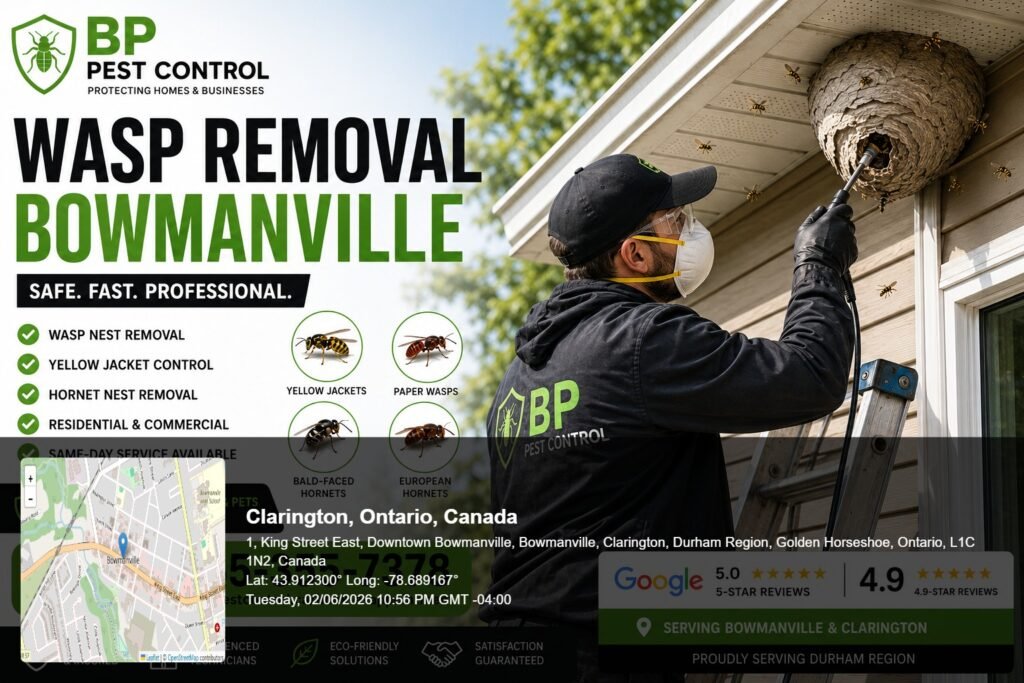
Wasp Nest in Shed Ajax: 9 Warning Signs and Safe Removal Guide
Finding a wasp nest in shed Ajax property owners use for gardening equipment, tools, bicycles, lawn equipment, seasonal decorations, or storage can quickly turn a normally useful outdoor space into an area that people avoid. A shed provides several sheltered locations where wasps may establish a nest, including roof edges, ceilings, rafters, wall cavities, corners, behind stored items, around windows, and near doors. A wasp nest in shed Ajax can also be difficult to locate because the colony may be hidden. You might notice wasps repeatedly entering through a small gap in the roof, flying behind a wall, disappearing beneath the eaves, or coming from an area behind stored equipment without seeing the actual nest. If you discover a wasp nest in shed Ajax, avoid disturbing the colony. Wasps can become defensive when their nesting area is threatened. Health Canada explains that approaching or accidentally disturbing a nest can trigger a defensive reaction, and professional assistance is recommended when an active nest needs removal. :contentReference[oaicite:0]{index=0} BP Pest Control provides professional pest control services in Ajax and surrounding Durham Region communities. If you have noticed repeated wasp activity around a shed, identifying the source of the activity is an important first step. Why Wasps Build Nests in Ajax Sheds A shed can provide many of the conditions that wasps look for when establishing a protected nesting site. Unlike areas of a home that are regularly occupied, sheds may remain closed and undisturbed for long periods. A wasp nest in shed Ajax can develop because the structure provides shelter from rain, wind, and other weather conditions. A shed can also have gaps around the roof, doors, windows, siding, vents, or foundation that give insects easy access. Common Reasons Wasps Enter Sheds These conditions can make a backyard shed a convenient location for nesting activity, especially when the structure is not regularly inspected. 9 Signs of a Wasp Nest in Shed Ajax Seeing one wasp inside a shed does not automatically mean that a colony is established there. However, repeated activity around the same area is a much stronger indication that nesting may be occurring. 1. Wasps Repeatedly Enter the Same Opening One of the strongest signs of a possible wasp nest in shed Ajax is repeated insect traffic through one specific opening. You may notice wasps flying toward a crack beneath the roof, entering behind siding, disappearing around a window frame, or moving through a gap near the shed’s eaves. If the same opening is being used repeatedly, do not immediately block it. The opening may provide access to a concealed nest. 2. Wasps Are Concentrated Around the Shed Roof Another warning sign is repeated wasp activity around the roofline. If several wasps are flying around one section of the roof and repeatedly disappearing beneath the overhang, there could be nesting activity inside or around the structure. A wasp nest in shed Ajax property may be visible underneath the roof edge, or the colony may be hidden inside a roof cavity. 3. You Discover a Visible Nest Some nests are easy to see. You may find a nest attached to a ceiling, wall, roof overhang, beam, or another sheltered surface. Even if the nest appears small, homeowners should not assume that it is inactive. A visible nest should not be knocked down, hit, poked, or otherwise disturbed. 4. Wasps Fly Out When the Shed Door Opens If opening the shed door suddenly results in several wasps flying from one section of the structure, pay attention to where they appear to be coming from. Repeated activity in the same area could indicate a nest behind stored items, in the ceiling, around the roofline, or inside another concealed location. 5. Wasps Are Coming From Behind Stored Items Sheds commonly contain gardening tools, boxes, bins, lawn equipment, wood, furniture, bicycles, and seasonal decorations. These items can make it difficult to see what is happening behind or above them. If you suspect a wasp nest in shed Ajax, do not start moving large amounts of stored equipment around simply to locate the colony. Disturbing a hidden nest can cause an unexpected defensive response. 6. Wasps Are Appearing Around the Shed Window Windows can provide access points, especially when screens are damaged or there are gaps around the frame. Repeated wasp activity around one shed window may indicate that insects are using the area as an entrance or that a nest is nearby. 7. Wasps Are Entering the Roof or Eaves A wasp nest in shed Ajax does not necessarily sit inside the main open area of the shed. Wasps may enter through roof edges, soffit-like overhangs, fascia, or gaps beneath roofing materials. CCOHS identifies overhangs such as building eaves, as well as walls and attic areas, among potential nesting locations for stinging insects. :contentReference[oaicite:1]{index=1} 8. Wasp Activity Increases Over Time If you initially noticed one or two insects but later begin seeing substantially more wasps around the shed, the nesting activity may have become more established. Increasing activity around one particular area should be treated as a reason to keep people away from the suspected nesting location. 9. You Hear Buzzing Inside a Wall or Ceiling Buzzing alone does not prove that a nest exists, but buzzing combined with repeated wasp sightings can provide useful information. If the buzzing appears to come from a wall, ceiling, or roof cavity, do not cut into the structure to investigate. Where Can a Wasp Nest Be Located Inside a Shed? A shed contains several potential nesting locations, which is why finding a wasp nest in shed Ajax can sometimes be more complicated than homeowners expect. Shed Ceiling The ceiling is often protected from regular activity and can provide an elevated nesting location. Roof Rafters Rafters and support beams may provide sheltered spaces where a colony can remain relatively undisturbed. Under the Roof Overhang A wasp nest may be attached directly beneath an overhang where it receives some protection from weather. Behind Fascia or Trim Gaps around exterior trim