Learning how to Prevent Wasps From Building Nests is one of the best ways to protect your family, pets, employees, and outdoor living spaces throughout the spring and summer. Every year, thousands of homeowners across Ontario discover wasp nests on roofs, soffits, decks, sheds, garages, fences, pergolas, gazebos, and even inside wall cavities. While removing an active colony is important, preventing queens from establishing a nest in the first place is safer, more affordable, and far less stressful.
Many people don’t realize that wasp prevention begins long before they ever see a nest. Newly fertilized queen wasps emerge from winter shelter during early spring and immediately begin searching for safe places to start a colony. During this time, queens inspect roofs, soffits, eaves, roof vents, garages, sheds, play structures, decks, pergolas, and many other sheltered areas around homes and businesses. If they find the right conditions, they begin building the first paper cells that eventually become a mature colony.
The good news is that many infestations can be avoided with simple property maintenance, regular inspections, and professional preventative treatments. Understanding how to Prevent Wasps From Building Nests allows homeowners to identify attractive nesting areas before they become serious problems. Preventative action not only reduces the chance of painful stings but also minimizes property disruptions, protects outdoor spaces, and lowers the likelihood of expensive emergency pest control later in the season.
Wasps choose nesting sites for several reasons. They look for sheltered areas protected from rain and wind, nearby food sources, reliable water supplies, and locations with minimal human activity. Homes that provide these conditions often experience recurring infestations year after year unless the underlying causes are addressed. This is why professional prevention focuses on making your property less attractive before queens begin building new colonies.
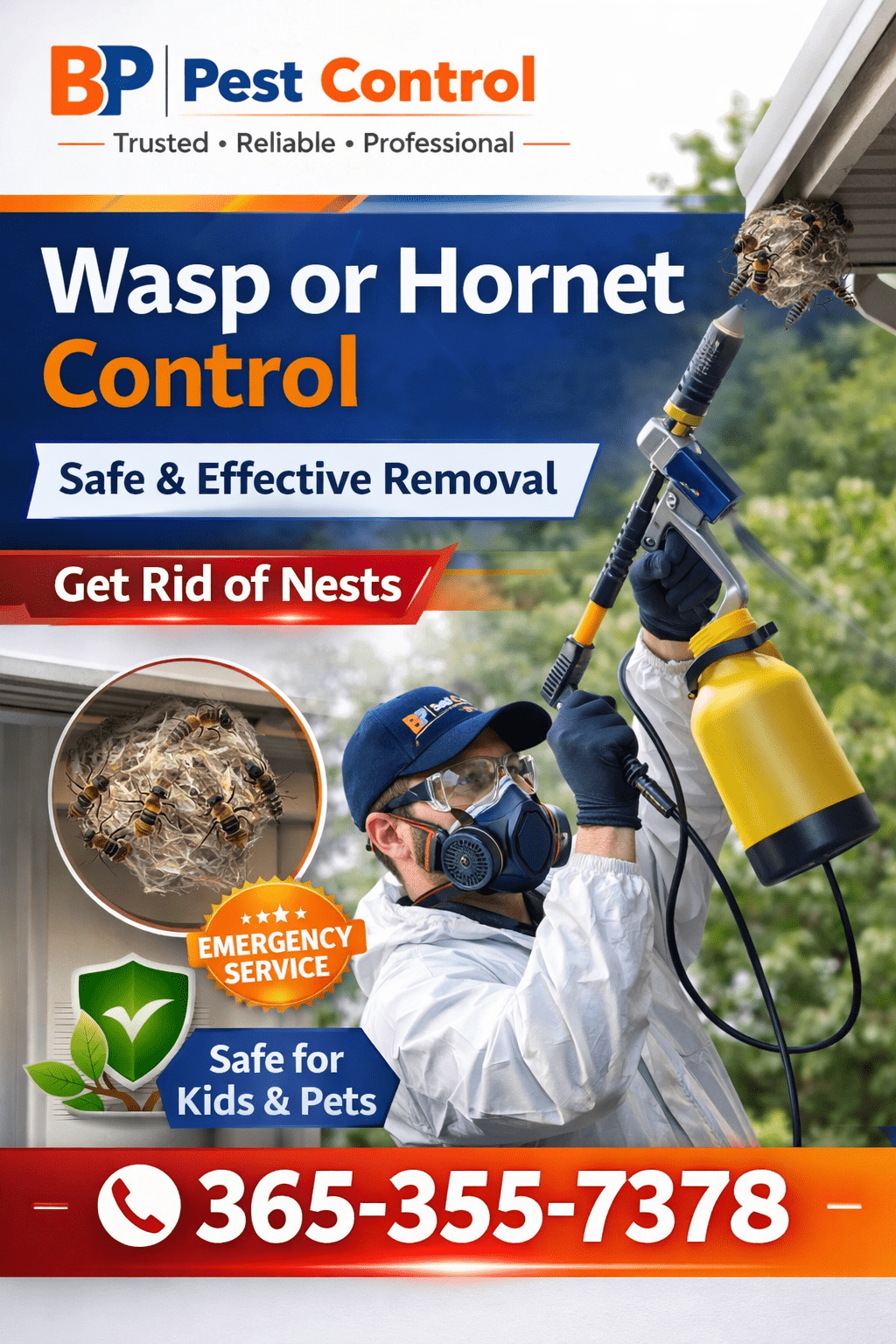
At BP Pest Control, we provide professional Wasp Control Services throughout Durham Region, Toronto, and the GTA. Our licensed technicians inspect your property, identify common nesting locations, safely remove active colonies, and develop customized prevention plans that help homeowners Prevent Wasps From Building Nests throughout the season.
⭐ Read Our 5-Star Google Reviews
Why Wasp Prevention Is Better Than Wasp Removal
The easiest wasp nest to remove is the one that never gets built. Once a colony becomes established, worker populations increase rapidly, making removal more difficult and increasing the risk of aggressive behaviour. By taking preventative action before spring nesting season, homeowners can often avoid dangerous infestations entirely.
Preventing nests also helps:
- Reduce sting risks.
- Protect children and pets.
- Lower long-term pest control costs.
- Keep outdoor spaces safe.
- Reduce recurring infestations.
- Protect homes and businesses.
- Improve peace of mind throughout wasp season.
10 Proven Ways to Prevent Wasps From Building Nests
1. Inspect Your Property Every Spring
The most effective way to Prevent Wasps From Building Nests is to inspect your property before nesting season begins. Early spring inspections help identify queen activity before colonies become established.
2. Seal Small Entry Points
Wasps only need a small opening to enter wall cavities, attics, roof spaces, garages, or sheds. Seal cracks around siding, utility penetrations, windows, soffits, roof vents, and fascia boards to reduce nesting opportunities.
3. Maintain Roofs and Soffits
Damaged rooflines, loose soffits, broken fascia boards, and missing shingles provide excellent access points for nesting queens. Regular roof maintenance is one of the best long-term prevention strategies.
4. Keep Garbage Containers Closed
Garbage bins, recycling containers, and compost piles attract worker wasps searching for food. Keep lids tightly sealed and clean containers regularly to discourage foraging activity around your property.
5. Remove Standing Water
Bird baths, clogged gutters, leaking faucets, pet bowls, decorative ponds, and other standing water sources provide moisture that attracts wasps throughout the season.
6. Trim Trees and Shrubs
Dense vegetation provides shelter and protected flight paths that encourage queens to establish nests nearby. Keep shrubs trimmed away from structures and remove low-hanging tree branches touching your roof.
7. Inspect Outdoor Structures
Pergolas, gazebos, sheds, decks, fences, playgrounds, and detached garages should all be inspected regularly. These structures provide some of the most common nesting locations found during professional inspections.
8. Remove Small Starter Nests Quickly
Small paper nests discovered early in the season are much easier to deal with than mature colonies later in the summer. Never ignore early nesting activity around your home.
9. Schedule Preventative Pest Treatments
Professional preventative treatments help homeowners Prevent Wasps From Building Nests by targeting high-risk nesting areas before queens establish new colonies.
10. Schedule Annual Professional Inspections
Routine inspections remain one of the most effective ways to identify hidden nesting conditions before they develop into serious infestations.
Common Areas That Attract Wasps
If you’re trying to Prevent Wasps From Building Nests, pay special attention to these high-risk areas:
- Roofs
- Soffits
- Eaves
- Roof vents
- Attics
- Wall cavities
- Garages
- Sheds
- Pergolas
- Gazebos
- Porches
- Decks
- Fence posts
- Trees
- Playsets
- Mailboxes
- BBQs
- Outdoor lighting fixtures
- Storage buildings
- Ground burrows
Signs That Wasps Are Preparing to Build a Nest
Recognizing early warning signs helps homeowners Prevent Wasps From Building Nests before colonies become established.
- One queen repeatedly inspecting the same location.
- Wasps flying around roof corners.
- Repeated activity beneath soffits.
- Wasps entering small openings.
- Tiny paper nests beginning to form.
- Daily activity around sheds or garages.
- Increased wasp sightings during spring.
- Worker wasps returning to one location.
Professional Wasp Prevention Inspections
BP Pest Control performs comprehensive property inspections designed to help homeowners Prevent Wasps From Building Nests. Our technicians inspect roofs, attics, soffits, garages, sheds, fences, decks, pergolas, gazebos, roof vents, trees, and other common nesting locations before recommending customized prevention solutions.
Learn more about our Professional Pest Inspection Services.
Residential Wasp Prevention Services
Our residential prevention programs help homeowners protect their properties through routine inspections, preventative treatments, and expert recommendations that reduce the likelihood of recurring wasp infestations.
Learn more about our Residential Pest Control Services.
10 Proven Ways to Prevent Wasps From Building Nests Around Your Home
Learning how to Prevent Wasps From Building Nests is one of the best ways to protect your family, pets, employees, and outdoor living spaces throughout the spring and summer. Every year, thousands of homeowners across Ontario discover wasp nests on roofs, soffits, decks, sheds, garages, fences, pergolas, gazebos, and even inside wall cavities. While removing an active colony is important, preventing queens from establishing a nest in the first place is safer, more affordable, and far less stressful.
Many people don’t realize that wasp prevention begins long before they ever see a nest. Newly fertilized queen wasps emerge from winter shelter during early spring and immediately begin searching for safe places to start a colony. During this time, queens inspect roofs, soffits, eaves, roof vents, garages, sheds, play structures, decks, pergolas, and many other sheltered areas around homes and businesses. If they find the right conditions, they begin building the first paper cells that eventually become a mature colony.
The good news is that many infestations can be avoided with simple property maintenance, regular inspections, and professional preventative treatments. Understanding how to Prevent Wasps From Building Nests allows homeowners to identify attractive nesting areas before they become serious problems. Preventative action not only reduces the chance of painful stings but also minimizes property disruptions, protects outdoor spaces, and lowers the likelihood of expensive emergency pest control later in the season.
Wasps choose nesting sites for several reasons. They look for sheltered areas protected from rain and wind, nearby food sources, reliable water supplies, and locations with minimal human activity. Homes that provide these conditions often experience recurring infestations year after year unless the underlying causes are addressed. This is why professional prevention focuses on making your property less attractive before queens begin building new colonies.
At BP Pest Control, we provide professional Wasp Control Services throughout Durham Region, Toronto, and the GTA. Our licensed technicians inspect your property, identify common nesting locations, safely remove active colonies, and develop customized prevention plans that help homeowners Prevent Wasps From Building Nests throughout the season.
⭐ Read Our 5-Star Google Reviews
Why Wasp Prevention Is Better Than Wasp Removal
The easiest wasp nest to remove is the one that never gets built. Once a colony becomes established, worker populations increase rapidly, making removal more difficult and increasing the risk of aggressive behaviour. By taking preventative action before spring nesting season, homeowners can often avoid dangerous infestations entirely.
Preventing nests also helps:
- Reduce sting risks.
- Protect children and pets.
- Lower long-term pest control costs.
- Keep outdoor spaces safe.
- Reduce recurring infestations.
- Protect homes and businesses.
- Improve peace of mind throughout wasp season.
10 Proven Ways to Prevent Wasps From Building Nests
1. Inspect Your Property Every Spring
The most effective way to Prevent Wasps From Building Nests is to inspect your property before nesting season begins. Early spring inspections help identify queen activity before colonies become established.
2. Seal Small Entry Points
Wasps only need a small opening to enter wall cavities, attics, roof spaces, garages, or sheds. Seal cracks around siding, utility penetrations, windows, soffits, roof vents, and fascia boards to reduce nesting opportunities.
3. Maintain Roofs and Soffits
Damaged rooflines, loose soffits, broken fascia boards, and missing shingles provide excellent access points for nesting queens. Regular roof maintenance is one of the best long-term prevention strategies.
4. Keep Garbage Containers Closed
Garbage bins, recycling containers, and compost piles attract worker wasps searching for food. Keep lids tightly sealed and clean containers regularly to discourage foraging activity around your property.
5. Remove Standing Water
Bird baths, clogged gutters, leaking faucets, pet bowls, decorative ponds, and other standing water sources provide moisture that attracts wasps throughout the season.
6. Trim Trees and Shrubs
Dense vegetation provides shelter and protected flight paths that encourage queens to establish nests nearby. Keep shrubs trimmed away from structures and remove low-hanging tree branches touching your roof.
7. Inspect Outdoor Structures
Pergolas, gazebos, sheds, decks, fences, playgrounds, and detached garages should all be inspected regularly. These structures provide some of the most common nesting locations found during professional inspections.
8. Remove Small Starter Nests Quickly
Small paper nests discovered early in the season are much easier to deal with than mature colonies later in the summer. Never ignore early nesting activity around your home.
9. Schedule Preventative Pest Treatments
Professional preventative treatments help homeowners Prevent Wasps From Building Nests by targeting high-risk nesting areas before queens establish new colonies.
10. Schedule Annual Professional Inspections
Routine inspections remain one of the most effective ways to identify hidden nesting conditions before they develop into serious infestations.
Common Areas That Attract Wasps
If you’re trying to Prevent Wasps From Building Nests, pay special attention to these high-risk areas:
- Roofs
- Soffits
- Eaves
- Roof vents
- Attics
- Wall cavities
- Garages
- Sheds
- Pergolas
- Gazebos
- Porches
- Decks
- Fence posts
- Trees
- Playsets
- Mailboxes
- BBQs
- Outdoor lighting fixtures
- Storage buildings
- Ground burrows
Signs That Wasps Are Preparing to Build a Nest
Recognizing early warning signs helps homeowners Prevent Wasps From Building Nests before colonies become established.
- One queen repeatedly inspecting the same location.
- Wasps flying around roof corners.
- Repeated activity beneath soffits.
- Wasps entering small openings.
- Tiny paper nests beginning to form.
- Daily activity around sheds or garages.
- Increased wasp sightings during spring.
- Worker wasps returning to one location.
Professional Wasp Prevention Inspections
BP Pest Control performs comprehensive property inspections designed to help homeowners Prevent Wasps From Building Nests. Our technicians inspect roofs, attics, soffits, garages, sheds, fences, decks, pergolas, gazebos, roof vents, trees, and other common nesting locations before recommending customized prevention solutions.
Learn more about our Professional Pest Inspection Services.
Residential Wasp Prevention Services
Our residential prevention programs help homeowners protect their properties through routine inspections, preventative treatments, and expert recommendations that reduce the likelihood of recurring wasp infestations.
Learn more about our Residential Pest Control Services.