Removing a Wasp Nest may seem like a simple weekend project, but it is one of the most dangerous pest control tasks homeowners attempt every year. Thousands of people across Ontario are stung while trying to remove active wasp nests using store-bought sprays, homemade remedies, or unsafe techniques they find online. Unfortunately, many DIY attempts make the situation worse by provoking aggressive colonies, leaving the queen alive, or driving worker wasps deeper into the structure of the home.
Whether the nest is hanging beneath a roof, hidden inside a wall cavity, located under a deck, or buried underground, Removing a Wasp Nest requires careful planning, proper protective equipment, and an understanding of wasp behaviour. A mature colony may contain hundreds or even thousands of worker wasps, all programmed to defend the queen when they sense a threat. Even a small disturbance can trigger a coordinated attack that results in dozens of painful stings within seconds.
One of the biggest misconceptions homeowners have is believing that all wasp nests are visible. While paper wasps often build exposed umbrella-shaped nests beneath soffits, porches, pergolas, and decks, many species—including yellow jackets—prefer hidden nesting locations. Professional technicians frequently discover colonies inside wall cavities, attics, roof vents, garages, sheds, chimneys, fence posts, hollow trees, and underground burrows. In these situations, spraying the visible entrance rarely eliminates the entire colony.
Another reason homeowners struggle with Removing a Wasp Nest is timing. Wasps behave differently throughout the season. A nest discovered in early spring may contain only a queen and a few developing workers, while the same colony in late summer can house hundreds of aggressive insects. As colonies mature, worker wasps become increasingly protective, making DIY removal much more hazardous.
Beyond the immediate danger of stings, improper nest removal can create additional problems. Blocking entry holes before the colony has been eliminated may force wasps into wall cavities or living spaces. Damaging roofing materials, siding, soffits, or insulation during removal attempts can also lead to expensive repairs. In some cases, homeowners end up paying more after a failed DIY attempt than they would have by hiring a professional from the beginning.
Understanding the risks associated with Removing a Wasp Nest allows homeowners to make safer decisions and recognize when professional help is the better option. While small, accessible starter nests may occasionally be manageable, large colonies, hidden nests, elevated locations, and aggressive species should always be treated with caution.
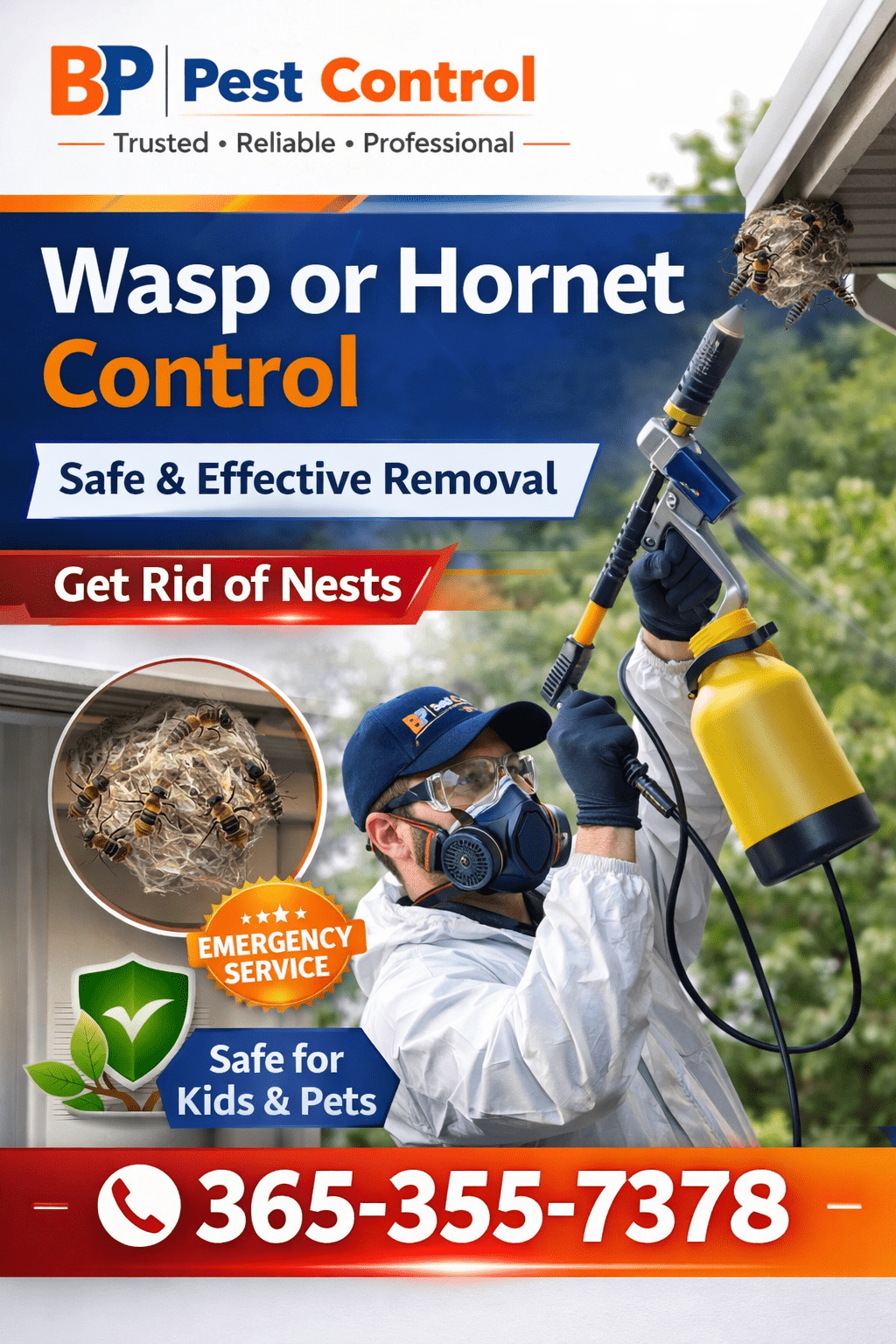
At BP Pest Control, we provide professional Wasp Removal Services throughout Durham Region, Toronto, and the GTA. Our licensed technicians safely locate active colonies, identify the wasp species, remove nests using professional equipment, and provide prevention recommendations that help reduce future infestations.
⭐ Read Our 5-Star Google Reviews
Why Removing a Wasp Nest Can Be Dangerous
Unlike bees, many wasp species can sting multiple times without dying. When one worker wasp senses danger, it releases alarm pheromones that alert nearby workers to defend the colony. This rapid communication can result in dozens or even hundreds of wasps attacking simultaneously. The larger the colony, the greater the potential danger.
Professional technicians evaluate several important factors before beginning any removal:
- Wasp species identification.
- Colony size.
- Nest accessibility.
- Hidden nesting areas.
- Nearby human activity.
- Potential sting risks.
- Structural safety.
- Long-term prevention opportunities.
12 Dangerous Mistakes to Avoid When Removing a Wasp Nest
1. Removing the Nest Without Identifying the Species
Different wasp species require different removal methods. Paper wasps, yellow jackets, bald-faced hornets, and European hornets all behave differently when threatened. Proper identification is one of the most important steps before Removing a Wasp Nest.
2. Waiting Too Long
Small spring colonies are much easier to manage than mature summer infestations. Delaying treatment allows worker populations to grow rapidly, increasing both danger and treatment complexity.
3. Ignoring Hidden Nesting Areas
Many homeowners remove an exposed nest while completely missing another colony hidden inside walls, attics, roof spaces, garages, or sheds.
4. Blocking the Entrance
Sealing entry holes before eliminating the colony traps wasps inside your home’s structure, often forcing them into living spaces through new openings.
5. Using Inadequate Protective Clothing
Short sleeves, gloves designed for gardening, and basic safety glasses provide little protection against aggressive worker wasps.
6. Standing Too Close to the Nest
Many homeowners underestimate how quickly wasps respond to threats. Standing directly beneath an active nest leaves little time to retreat once the colony becomes defensive.
7. Attempting Removal From a Ladder
Falls are one of the most common secondary injuries associated with DIY wasp removal. A single sting can cause panic, increasing the risk of losing balance while working at heights.
8. Using Fire or Gasoline
Using fire, gasoline, or other dangerous methods to destroy a nest creates serious fire hazards and should never be attempted.
9. Spraying Only the Outside of the Nest
Visible wasps are only a small portion of the colony. Without reaching the queen and developing brood, the infestation often survives.
10. Ignoring Early Warning Signs
Repeated wasp activity around roofs, soffits, garages, decks, or sheds usually indicates an active colony nearby. Early intervention reduces the risk of larger infestations.
11. Forgetting to Inspect the Rest of the Property
Professional inspections frequently discover multiple nests on the same property. Trees, pergolas, fences, playsets, roof vents, and sheds should all be checked.
12. Not Calling a Professional When Necessary
The most dangerous mistake when Removing a Wasp Nest is attempting to handle a large, hidden, or aggressive colony without professional assistance. Licensed technicians have the equipment and experience needed to remove nests safely.
Common Places Homeowners Attempt DIY Wasp Removal
BP Pest Control commonly removes nests from these locations after unsuccessful DIY attempts:
- Roofs
- Soffits
- Eaves
- Attics
- Wall cavities
- Garages
- Sheds
- Pergolas
- Gazebos
- Porches
- Under decks
- Fence posts
- Trees
- Roof vents
- Ground burrows
- Mailboxes
- Outdoor lighting fixtures
- BBQs
- Playsets
- Chimneys
Professional Wasp Nest Inspections
Before Removing a Wasp Nest, BP Pest Control performs a complete inspection to identify hidden colonies, determine the wasp species, locate entry points, and recommend the safest treatment plan for your property.
Learn more about our Professional Pest Inspection Services.
Residential Wasp Removal Services
We provide safe wasp nest removal for homes, townhouses, condominiums, cottages, and rental properties throughout Durham Region, Toronto, and the GTA. Our technicians remove nests from roofs, soffits, attics, garages, sheds, fences, decks, pergolas, gazebos, and many other residential structures.
Learn more about our Residential Pest Control Services.
When Should You Avoid Removing a Wasp Nest Yourself?
While some homeowners consider Removing a Wasp Nest themselves, there are situations where professional treatment is the safest choice. Large colonies, hidden nests, elevated locations, and aggressive wasp species can quickly turn a simple project into a dangerous emergency. Understanding your limitations is just as important as recognizing the warning signs of an active infestation.
You should avoid DIY wasp nest removal if:
- The nest is larger than a softball.
- Wasps are entering your walls or attic.
- The colony is hidden inside your home.
- The nest is located high on the roof.
- Someone in your household has a sting allergy.
- The nest is near children’s play areas.
- The colony has become aggressive.
- Multiple nests are present on the property.
- You are unsure which wasp species is involved.
- You do not have proper protective equipment.
Why Professional Wasp Removal Is Safer
Professional pest control technicians understand the behaviour of different wasp species and know how to approach each infestation safely. Instead of simply treating visible insects, they inspect the entire property to locate hidden colonies, identify entry points, and eliminate the source of the problem.
Professional removal provides:
- Complete colony elimination.
- Reduced sting risk.
- Identification of hidden nests.
- Safe treatment of elevated nests.
- Professional equipment and protective clothing.
- Long-term prevention recommendations.
- Inspection of surrounding structures.
- Reduced chance of recurring infestations.
How BP Pest Control Safely Removes Wasp Nests
Every Removing a Wasp Nest service begins with a detailed inspection. Our technicians identify the wasp species, evaluate colony size, locate hidden nesting areas, and determine the safest removal strategy. We also inspect nearby structures for additional nests that may otherwise go unnoticed.
Our inspection includes:
- Roof inspection.
- Soffit inspection.
- Attic inspection.
- Wall cavity inspection.
- Garage inspection.
- Shed inspection.
- Deck inspection.
- Pergola and gazebo inspection.
- Fence inspection.
- Tree inspection.
- Roof vent inspection.
- Species identification.
- Entry point identification.
- Customized prevention recommendations.
Learn more about our Professional Pest Inspection Services.
How to Prevent Future Wasp Nests
After safely Removing a Wasp Nest, prevention is the next step. Eliminating conditions that attract queen wasps helps reduce the likelihood of future infestations.
- Inspect your property every spring.
- Seal gaps around siding and soffits.
- Repair damaged roof vents.
- Keep garbage containers tightly sealed.
- Trim shrubs and tree branches.
- Remove standing water.
- Inspect sheds and garages regularly.
- Schedule annual preventative pest treatments.
Learn more about our Preventative Pest Treatment Services.
Commercial Wasp Removal Services
Restaurants, retail stores, warehouses, office buildings, schools, apartment complexes, hotels, and industrial facilities all require effective wasp management to protect employees, customers, and visitors. BP Pest Control provides customized commercial wasp removal services throughout Durham Region, Toronto, and the GTA.
Learn more about our Commercial Pest Control Services.
Industrial Wasp Control
Industrial properties often contain large roof structures, loading docks, equipment yards, utility buildings, and storage facilities that attract nesting wasps. Routine inspections and preventative treatments help reduce safety hazards while maintaining uninterrupted operations.
Learn more about our Industrial Pest Control Services.
Why Choose BP Pest Control?
For more than 20 years, BP Pest Control has specialized in Removing a Wasp Nest safely and effectively throughout Durham Region, Toronto, and the GTA. Our licensed technicians provide comprehensive inspections, professional removal services, and customized prevention strategies to help keep your property protected throughout the wasp season.
- 20+ Years of Experience
- Licensed & Experienced Technicians
- Residential Wasp Removal
- Commercial Wasp Control
- Industrial Pest Management
- Professional Property Inspections
- Safe & Effective Treatments
- Preventative Maintenance Programs
- Customized Prevention Plans
- 5-Star Google Rated
Frequently Asked Questions
Is it safe to remove a wasp nest yourself?
Small, easily accessible nests may sometimes be removed safely, but large, hidden, or elevated nests should be handled by a professional to reduce the risk of multiple stings and incomplete removal.
What is the biggest mistake people make when removing a wasp nest?
Attempting removal without identifying the nest location, colony size, or wasp species is one of the most common mistakes. Many homeowners also underestimate how aggressively wasps defend their nests.
Can wasps return after a nest is removed?
The original colony will not return once it has been eliminated, but new queen wasps may choose the same location in future seasons if attractive nesting conditions remain.
What time of year is best for wasp nest removal?
Early spring is ideal because colonies are still small. However, active nests should be removed whenever they pose a safety risk.
Do you remove hidden wasp nests?
Yes. BP Pest Control specializes in locating and removing hidden nests inside walls, attics, soffits, roof spaces, garages, sheds, decks, and other concealed areas.
Book Professional Wasp Removal Today
If you’re considering Removing a Wasp Nest, don’t take unnecessary risks. BP Pest Control provides professional inspections, safe wasp removal, and preventative treatment services for residential, commercial, and industrial properties throughout Durham Region, Toronto, and the GTA.
📞 Book Your Wasp Removal Today
🏠 Residential Pest Control
🏢 Commercial Pest Control
🏭 Industrial Pest Control
🔍 Professional Pest Inspection Services
🛡️ Preventative Pest Treatments
🐝 Professional Wasp Removal Services
🌐 Visit BP Pest Control
⭐ Read Our 5-Star Google Reviews