Wasp Nest in Attic is a serious pest problem that many homeowners don’t discover until the colony has grown significantly. Attics provide warm, dry, and protected environments where wasps can establish large colonies without being disturbed. A single queen entering through a small opening in the roof, soffit, fascia, or roof vent during spring can build a nest that expands into hundreds or even thousands of worker wasps by late summer. Professional Wasp Nest in Attic inspections help locate hidden colonies before they create safety hazards for your family and cause ongoing wasp activity around your home.
Unlike exposed nests hanging from trees or under decks, attic nests often remain hidden inside insulation, roof framing, rafters, or wall cavities. Many homeowners first notice a problem when they hear buzzing above the ceiling or observe dozens of wasps flying around their roofline every day.
Ignoring a Wasp Nest in Attic allows the colony to continue expanding throughout the summer. As worker populations increase, so does the risk of aggressive behaviour if the colony is disturbed during roof repairs, attic inspections, or home maintenance.
At BP Pest Control, we provide professional Wasp Nest in Attic inspections and removal services throughout Durham Region, Toronto, and the GTA. Our experienced technicians identify the wasp species, locate hidden attic colonies, safely remove active nests, and provide long-term prevention strategies.
⭐ Read Our 5-Star Google Reviews
Why Attics Attract Wasps
Understanding why a Wasp Nest in Attic develops helps homeowners recognize risk factors before an infestation becomes severe. Attics provide many of the conditions wasps naturally seek when establishing new colonies.
- Warm temperatures
- Protection from rain and wind
- Quiet nesting areas
- Easy access through roof openings
- Protection from predators
- Large enclosed spaces
- Dry structural environment
- Minimal human activity
- Secure breeding conditions
- Long-term colony protection
How Wasps Get Into Your Attic
Professional inspections often reveal that a Wasp Nest in Attic began through surprisingly small entry points around the exterior of the home.
Damaged Soffits
Loose or damaged soffit panels allow queens to enter roof cavities where they establish new nests.
Roof Vents
Missing or damaged vent screens provide direct access into attic spaces.
Roof Fascia
Openings behind fascia boards frequently allow wasps to enter unnoticed.
Roof Flashing
Small gaps around flashing can provide another entry point into attic voids.
Roof Shingles
Damaged shingles sometimes expose structural openings that wasps can use.
Gable Vents
Unprotected gable vents commonly allow flying insects to enter attic spaces.
Utility Penetrations
Openings around electrical wiring, plumbing vents, or utility lines may provide access into the attic.
Construction Gaps
Even tiny gaps left during construction can become entry points for nesting queens.
Signs You Have a Wasp Nest in Attic
Learning to recognize the warning signs of a Wasp Nest in Attic helps prevent larger infestations and reduces the risk of unexpected encounters.
1. Buzzing Sounds Above the Ceiling
Continuous buzzing coming from the attic is often one of the earliest signs of an active colony.
2. Wasps Around Rooflines
Worker wasps repeatedly flying around the roof usually indicate an established nest nearby.
3. Wasps Entering Roof Openings
Multiple wasps using the same roof opening strongly suggests a hidden attic nest.
4. Increased Summer Activity
Colony populations increase rapidly throughout the summer as more workers emerge.
5. Wasps Indoors
Occasionally, worker wasps may enter living spaces through ceiling fixtures or attic access points.
6. Paper Nest Material
If the attic is accessible, you may notice grey paper-like nest material attached to rafters or framing.
7. Aggressive Behaviour Near the Roof
Wasps becoming defensive while you’re outside near the home often indicates a nearby nest.
8. Daily Wasp Activity
Consistent movement of wasps around the same section of the roof is one of the clearest indicators of a Wasp Nest in Attic.
Common Wasp Species Found in Attics
Yellow Jackets
Yellow jackets frequently establish concealed nests inside attics because enclosed spaces provide excellent protection.
European Hornets
European hornets commonly nest inside attics, barns, wall cavities, and other enclosed structural spaces.
Paper Wasps
Paper wasps occasionally expand from exposed roof nests into attic cavities when access is available.
Bald-Faced Hornets
Although they usually construct aerial nests, they sometimes utilize attic spaces connected to roof structures.
Residential Attic Wasp Inspections
BP Pest Control provides professional inspections for homeowners dealing with a Wasp Nest in Attic. Our technicians inspect the attic, roofline, soffits, vents, fascia, and surrounding exterior to locate hidden colonies before they continue expanding.
- Detached homes
- Semi-detached homes
- Townhouses
- Condominiums
- Apartment buildings
- Rental properties
Learn more about our Residential Pest Control Services.
Commercial Building Attic Inspections
Schools, office buildings, hotels, restaurants, apartment complexes, warehouses, and commercial facilities often contain attic and roof spaces where wasps establish hidden colonies. Routine inspections help protect employees, tenants, and customers while preventing larger infestations.
Learn more about our Commercial Pest Control Services.
When Should You Remove a Wasp Nest in Attic?
A Wasp Nest in Attic should be professionally removed as soon as it is discovered. Leaving the colony untreated allows it to continue growing throughout the summer, increasing the number of worker wasps and making removal more difficult. Large attic colonies can create ongoing wasp activity around your property and increase the risk of painful stings during home maintenance or roof repairs.
You should schedule professional removal if:
- You hear buzzing above the ceiling.
- Wasps repeatedly enter your roof or attic vents.
- You notice increasing wasp activity around the roofline.
- Wasps are entering your living space.
- The colony is located near attic access.
- The nest is hidden inside roof cavities.
- You are allergic to insect stings.
- You suspect multiple nests.
- The colony has become aggressive.
- DIY treatments have not solved the problem.
Why DIY Attic Wasp Removal Is Dangerous
Many homeowners attempt to remove a Wasp Nest in Attic using aerosol sprays or homemade remedies. Unfortunately, attic nests are often hidden deep inside insulation, rafters, roof framing, or enclosed wall spaces where store-bought products cannot eliminate the entire colony. Disturbing the nest can cause hundreds of worker wasps to swarm in defense.
DIY removal may result in:
- Multiple painful stings
- Incomplete colony removal
- Hidden nests remaining active
- Damage to insulation or building materials
- Aggressive swarming
- Recurring infestations
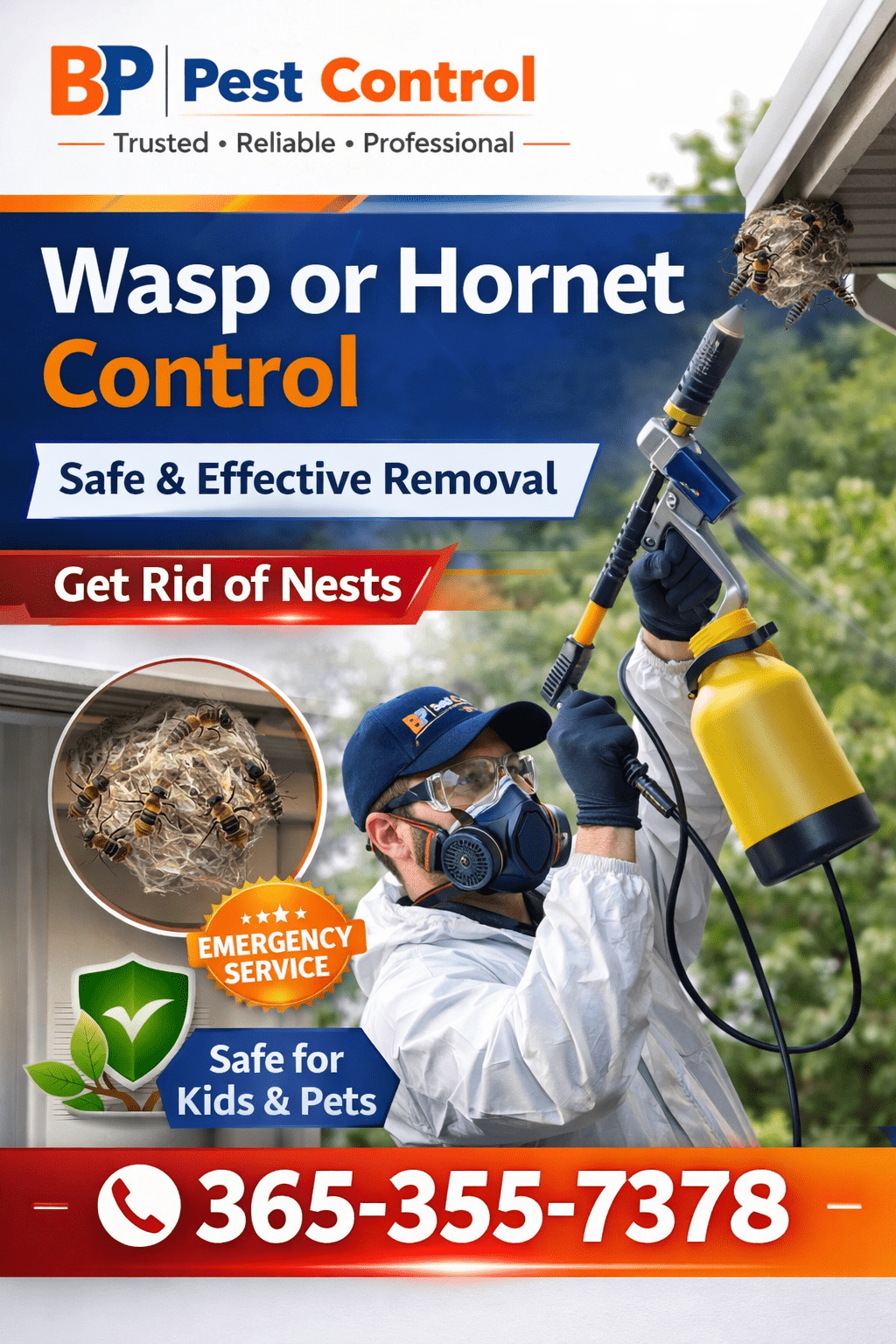
Professional Wasp Removal Services safely remove the colony while reducing the likelihood of future infestations.
How Professional Attic Wasp Inspections Work
Every Wasp Nest in Attic inspection by BP Pest Control begins with identifying the wasp species and locating all entry points into the attic. Our technicians inspect the complete roof system to ensure hidden colonies are found and safely removed.
Our inspections include:
- Attic inspection
- Roofline inspection
- Soffit inspection
- Roof vent inspection
- Fascia board inspection
- Gable vent inspection
- Wall cavity assessment
- Species identification
- Nest location confirmation
- Long-term prevention recommendations
Learn more about our Professional Pest Inspection Services.
How to Prevent Wasps From Nesting in Your Attic
Preventative maintenance is one of the most effective ways to avoid another Wasp Nest in Attic. Small repairs completed before spring nesting season greatly reduce attractive nesting opportunities.
- Inspect rooflines annually.
- Repair damaged soffits.
- Seal roof entry points.
- Replace damaged vent screens.
- Repair loose fascia boards.
- Maintain roof flashing.
- Trim overhanging tree branches.
- Remove abandoned nests.
- Schedule annual pest inspections.
- Invest in preventative pest treatments.
Learn more about our Preventative Pest Treatment Services.
Commercial Attic Wasp Management
Hotels, apartment buildings, restaurants, office complexes, schools, retail plazas, warehouses, and commercial facilities often have large attic spaces that provide ideal nesting conditions. Routine inspections help protect occupants while preventing larger infestations.
Learn more about our Commercial Pest Control Services.
Industrial Roof & Attic Wasp Control
Manufacturing facilities, warehouses, agricultural buildings, logistics centres, and industrial properties commonly experience wasp activity in roof cavities and attic spaces. Regular inspections help improve workplace safety and reduce operational disruptions.
Learn more about our Industrial Pest Control Services.
Why Choose BP Pest Control?
For over 20 years, BP Pest Control has provided professional Wasp Nest in Attic inspections and removal services throughout Durham Region, Toronto, and the GTA. Our experienced technicians locate hidden colonies, safely eliminate active nests, and provide customized prevention strategies that help keep your property protected year-round.
- 20+ Years of Experience
- Licensed & Experienced Technicians
- Residential Wasp Removal
- Commercial Wasp Removal
- Industrial Wasp Management
- Comprehensive Property Inspections
- Safe & Effective Treatments
- Customized Prevention Plans
- Preventative Maintenance Programs
- 5-Star Google Rated
Frequently Asked Questions
How do I know if I have a wasp nest in my attic?
Buzzing sounds above the ceiling, repeated wasp activity around the roofline, and wasps entering roof vents or soffits are common signs of an attic nest.
Can wasps damage my attic?
While wasps generally do not chew structural wood, they can establish large colonies inside attic spaces that create ongoing pest problems and increase safety risks.
Is a wasp nest in the attic dangerous?
Yes. Large colonies can aggressively defend the nest if disturbed during roof repairs, attic inspections, or home maintenance.
Can I remove an attic wasp nest myself?
DIY removal is not recommended because attic nests are often hidden inside structural cavities where complete removal is difficult and dangerous.
How can I prevent future attic wasp nests?
Routine roof inspections, repairing damaged soffits and vents, sealing entry points, and scheduling preventative pest treatments help reduce future infestations.
Book Your Attic Wasp Inspection Today
If you’ve noticed wasps entering your roof or hear buzzing above your ceiling, you may have a Wasp Nest in Attic. BP Pest Control provides professional inspections, safe wasp nest removal, and long-term prevention services for homes and businesses throughout Durham Region, Toronto, and the GTA.
📞 Book Your Wasp Inspection Today
🏠 Residential Pest Control
🏢 Commercial Pest Control
🏭 Industrial Pest Control
🔍 Professional Pest Inspection Services
🛡️ Preventative Pest Treatments
🐝 Professional Wasp Removal Services
🌐 Visit BP Pest Control
⭐ Read Our 5-Star Google Reviews