Finding a wasp nest in house can be unsettling, especially when wasps are appearing indoors, around windows, near doors, inside walls, or around other areas of your home. A wasp nest in house may be located somewhere obvious, but in many situations the nest can remain hidden inside a wall cavity, attic, roofline, soffit, chimney area, or another protected space.
When homeowners discover a wasp nest in house, the first priority should be understanding where the wasps are coming from. Simply removing individual wasps that enter a room may not solve the underlying problem if an active nest is located somewhere inside or around the structure.
Wasps can use small openings around roofing, siding, soffits, vents, windows, doors, utility penetrations, and other exterior areas to access sheltered spaces. Once inside a protected area, they may establish a nest that is difficult for a homeowner to see.
This guide explains how to recognize a wasp nest in house, common locations where wasps may establish nests, warning signs to watch for, what homeowners should avoid doing, how professional wasp treatment works, and how to reduce the likelihood of future nesting.
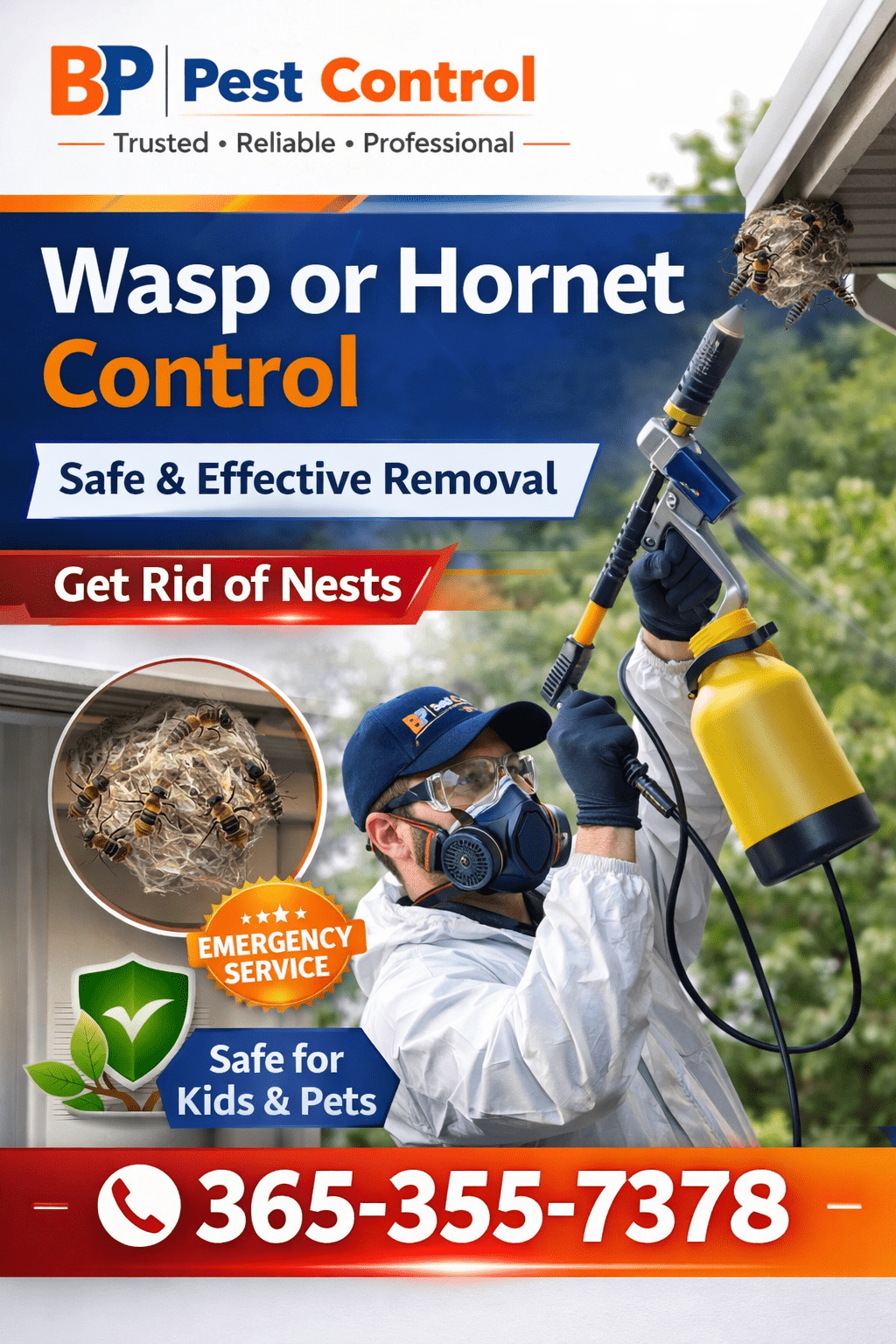
If you are dealing with wasp activity around your property, BP Pest Control provides professional pest management services for residential and commercial properties throughout Oshawa, Durham Region, and surrounding Ontario communities.
What Does a Wasp Nest in House Mean?
A wasp nest in house generally means that wasps have found a protected location within or directly connected to the structure where they can establish nesting activity.
The phrase can describe several different situations. A nest may actually be inside a wall cavity, attic, roof space, soffit, chimney, garage connection, or another enclosed part of the property. In other cases, the nest may be outside but positioned immediately beside an entry point into the home.
Because wasps can use small openings, homeowners may see insects indoors without immediately seeing the nest.
Seeing Wasps Indoors Does Not Always Mean the Nest Is in the Room
If you find several wasps inside your home, it does not necessarily mean that the nest is located directly inside the room where you found them.
Wasps may enter living spaces through gaps or openings from a concealed nesting area. The source could be inside a wall, above a ceiling, within an attic, around a roofline, or near another structural opening.
This is why locating the source of the activity is important when dealing with a potential wasp nest in house.
9 Common Places to Find a Wasp Nest in House
1. Wall Cavities
One of the more difficult situations is a wasp nest in house located inside a wall cavity.
Wasps may enter through an exterior gap and establish a nest within the protected space. From inside the home, residents may notice wasps appearing around windows, vents, light fixtures, baseboards, ceilings, or other openings.
If wasps repeatedly appear in one particular room, this can provide useful information to a pest professional investigating the source.
Do not open a wall simply because you suspect a nest is inside. Professional assessment can help determine where the activity is originating before structural work is considered.
2. Attic Spaces
An attic can provide a sheltered environment for wasp nesting.
If you notice wasps around attic access points, ceiling openings, roof vents, or upper areas of the home, an attic or roof-related nesting location may need to be considered.
A wasp nest in house located in an attic can be particularly difficult for homeowners to access safely because of insulation, limited walking surfaces, roofing components, and the possibility of disturbing the nest.
Homeowners should avoid entering a confined attic space to investigate an active nest without appropriate professional guidance.
3. Rooflines
Rooflines provide numerous sheltered areas where wasps may establish nests.
Gaps around roof edges, soffits, fascia, vents, and other exterior components can provide access to protected areas.
If wasps repeatedly fly toward one section of the roof and disappear into an opening, this may be an important clue when investigating a wasp nest in house.
4. Soffits and Eaves
Soffits and eaves can offer protection from weather and disturbance.
Wasps entering and exiting a soffit opening repeatedly may indicate that a nest is located inside the structure or immediately behind the exterior covering.
Do not seal an active entry point before the nesting situation has been assessed. Blocking an opening without understanding what is happening inside can complicate the problem.
5. Garages
Attached garages can provide multiple potential nesting locations.
Wasps may be noticed around garage doors, roof edges, storage areas, ceiling spaces, wall cavities, or exterior openings.
A wasp nest in house does not necessarily have to be inside the main living area. An attached garage can also be connected to the structure and may require professional assessment.
6. Chimney and Vent Areas
Chimney surrounds and ventilation areas can provide sheltered spaces that may attract insects.
If wasps are repeatedly appearing near a chimney, vent, roof opening, or upper section of the home, the surrounding structure should be inspected carefully.
Avoid attempting to reach into a chimney or vent to investigate an active nest.
7. Around Windows and Doors
Windows and doors have numerous seams, frames, screens, and exterior gaps that may provide potential access points.
Wasps gathering repeatedly around one window or doorway may be responding to food sources, but repeated traffic toward a specific opening can also warrant investigation.
If a wasp nest in house is suspected near an entrance, keep household members away from the affected area while the situation is assessed.
8. Behind Siding
Damaged or separated siding can create protected spaces that wasps may use for access.
Wasps repeatedly entering behind siding can be difficult to manage because the nest itself may not be visible.
A professional inspection can help determine whether the activity is connected to an active nest behind the exterior surface.
9. Other Protected Structural Areas
Wasps can potentially use many sheltered spaces around a property.
Other areas worth considering include:
- Porches
- Deck connections
- Exterior wall openings
- Utility penetrations
- Storage areas
- Roof voids
- Covered exterior structures
When investigating a wasp nest in house, the goal is to identify the source of the activity rather than simply treat the locations where individual wasps happen to be seen.
Signs of a Wasp Nest in House
Recognizing the warning signs of a wasp nest in house can help homeowners determine when professional assessment may be appropriate.
Repeated Wasps Indoors
If wasps repeatedly appear indoors over several days, there may be an access point or nesting location connected to the structure.
Pay attention to where the wasps are being found. Repeated activity in one room or around one opening can provide useful information.
Wasps Entering One Opening
If you can safely observe wasps repeatedly entering and leaving the same exterior opening, this may indicate nesting activity.
Buzzing Inside a Wall
In some situations, residents may hear insect activity inside a wall. Sound alone does not confirm a nest, but it can be useful information for a professional inspection.
Increased Wasp Activity Outside
High activity around one section of the roof, soffit, siding, deck, or other structure can indicate a nearby nest.
Dead Wasps Near Windows
Finding multiple dead wasps near windows or other openings may indicate that insects are entering the home from somewhere nearby.
This sign should be considered alongside other observations rather than treated as proof of an indoor nest.
Why a Wasp Nest in House Can Be Difficult to Find
A wasp nest in house can remain hidden because modern homes contain many enclosed and interconnected spaces.
Exterior siding, soffits, roofing materials, insulation, wall cavities, and other structural components can prevent homeowners from seeing the nest directly.
Wasps may only be visible when they enter or exit the structure.
This creates a common situation where residents know that wasps are present but cannot determine exactly where they are nesting.
Small Entry Points
Wasps can use surprisingly small openings to gain access to sheltered areas.
Protected Structural Spaces
Wall cavities and roof spaces are not always accessible for routine inspection.
Exterior Nesting Can Look Like an Indoor Problem
A nest outside but immediately beside a window, door, soffit, or wall opening can result in frequent encounters indoors and outdoors.
Professional inspection can help distinguish between these situations.
What Should You Do If You Find a Wasp Nest in House?
If you discover a wasp nest in house, avoid disturbing it.
Instead:
- Keep children away from the affected area.
- Keep pets away from the suspected nesting location.
- Avoid touching the nest.
- Avoid shaking or opening the area containing the nest.
- Do not use a ladder to reach an elevated nest.
- Observe activity from a safe distance.
- Contact a qualified pest professional when appropriate.
If wasps are entering occupied areas of the home, keeping people away from the immediate activity and reducing unnecessary disturbance can help minimize accidental encounters.
Should You Spray a Wasp Nest in House?
Homeowners often consider store-bought insecticides when they discover a wasp nest in house. However, spraying an active nest without understanding its location and accessibility can create additional problems.
If the nest is inside a wall, attic, soffit, roof space, or another concealed area, spraying the visible opening may not address the entire source.
Disturbing an active nest can also cause defensive behaviour.
For concealed, elevated, or difficult-to-access nests, professional assessment is generally the better option.
Why You Should Not Immediately Seal a Wasp Entry Point
If you see wasps entering a crack or opening, your first instinct may be to seal it.
However, immediately blocking an active entry point can interfere with the treatment process and may cause insects to seek alternative routes.
A professional wasp nest in house assessment can determine what the opening is connected to and whether it should be addressed before or after treatment.
Structural repairs and sealing should be considered at the appropriate stage after the active nesting situation has been addressed.
Professional Wasp Nest in House Treatment
Professional treatment begins with understanding the specific circumstances.
Property Inspection
The affected areas are assessed to determine where wasp activity is occurring.
Nest Location
The technician investigates visible and potentially concealed nesting areas where possible.
Species Assessment
The type of wasp can influence the nesting behaviour and appropriate treatment considerations.
Treatment Planning
The treatment approach is selected based on the nest location, accessibility, species, property layout, and surrounding conditions.
Targeted Treatment
Appropriate treatment is applied according to professional pest-management practices and product directions.
Follow-Up and Monitoring
Depending on the circumstances, continued observation may be recommended to determine whether activity has declined as expected.
BP Pest Control also provides pest inspection services for properties where the source of pest activity needs to be investigated.
Wasp Nest in House vs Wasp Nest Outside
Not every wasp problem originates inside the home.
An exterior nest may be located:
- Under a deck
- Near a porch
- In a tree
- Under eaves
- Near a shed
- Around a garage
- Near a roofline
However, an exterior nest close to a structure can still result in wasps entering the home.
Determining whether the nest is actually inside the building or simply adjacent to it is an important part of professional assessment.
How to Prevent a Wasp Nest in House
Inspect Exterior Openings
After active nesting has been properly addressed, inspect appropriate exterior openings around siding, soffits, rooflines, vents, and utility penetrations.
Maintain Window and Door Screens
Damaged screens can provide opportunities for insects to enter occupied areas.
Keep Doors Closed When Practical
During periods of high outdoor insect activity, keeping doors closed when they are not being used can reduce opportunities for insects to enter.
Keep Garbage Containers Closed
Garbage and food residue can attract foraging insects. Keeping containers closed and cleaning spills can reduce potential attractants.
Clean Outdoor Food Areas
Clean food and drink residue from patios, decks, outdoor tables, and other areas after use.
Manage Fallen Fruit
Where practical, remove fallen fruit from outdoor areas to reduce potential food sources.
Inspect Sheltered Areas
Routine inspection of sheds, garages, decks, rooflines, and other sheltered locations can help identify developing pest problems earlier.
For broader prevention information, visit the preventative treatments page.
Wasp Nest in House During Summer
Wasp activity generally becomes more noticeable during warmer periods of the year.
Homeowners may spend more time outdoors, which means nests around patios, decks, gardens, entrances, and other areas become easier to notice.
At the same time, wasps may be actively foraging and maintaining established nests.
If you discover a wasp nest in house during the warmer months, avoid disturbing the nest and consider professional assessment when the location is difficult to access or close to people.
Wasp Nest in House for Oshawa and Durham Region Homes
Homeowners across Oshawa and Durham Region can encounter wasp activity around detached houses, townhouses, condominiums, rental properties, garages, decks, sheds, and other residential structures.
Properties with multiple exterior structures can have several potential nesting locations.
If wasp activity is concentrated around a roofline, soffit, garage, wall, deck, or another part of the structure, documenting where and when you see the activity can help a pest professional understand the problem.
BP Pest Control serves residential properties through its residential pest control services.
Wasp Nest in House for Businesses and Commercial Properties
A wasp nest in house is not limited to residential buildings. Similar nesting problems can occur in commercial structures.
Businesses may discover wasps around:
- Customer entrances
- Employee entrances
- Loading areas
- Garbage areas
- Outdoor seating
- Rooflines
- Wall cavities
- Storage spaces
Businesses should consider customer and employee traffic when determining how urgently a wasp problem needs to be assessed.
BP Pest Control provides commercial pest control services for businesses dealing with pest concerns.
When Should You Call a Professional?
Professional assessment may be appropriate when:
- You repeatedly find wasps indoors.
- You suspect a nest is inside a wall.
- Wasps are entering the roof or soffit.
- You hear activity inside a wall or ceiling.
- The nest is elevated.
- The nest is difficult to access.
- The nest is close to a frequently used entrance.
- Children or pets regularly use the affected area.
- You have attempted DIY treatment without resolving the activity.
A professional can assess the specific situation rather than assuming that every wasp problem requires the same treatment.
Frequently Asked Questions About a Wasp Nest in House
Can a wasp nest be inside a house wall?
Yes, wasps can potentially establish nests in protected wall cavities when they gain access through an exterior opening. Repeated activity around a particular wall or opening can warrant professional assessment.
How do I know if I have a wasp nest in my house?
Repeated wasps indoors, wasps entering the same exterior opening, unusual insect activity around walls or ceilings, and concentrated activity around a particular structural area can all be signs worth investigating.
Can I remove a wasp nest in house myself?
Disturbing an active nest can expose you to stings. Nests located inside walls, attics, roofs, soffits, or elevated areas can be especially difficult to access safely, so professional assessment may be appropriate.
Should I close the hole where wasps are entering?
Do not immediately seal an opening that appears to be actively used by wasps. The opening should be assessed first to determine whether it is connected to an active nest.
Why are wasps coming into my house?
Wasps may enter through open doors and windows, damaged screens, structural gaps, or openings connected to concealed nesting areas. Identifying the specific entry route can help determine the source.
Can a wasp nest damage my house?
The main concern with a wasp nest inside or around a home is generally the increased interaction between people and stinging insects. Concealed nests can also make the source of activity difficult to identify.
How can I prevent a wasp nest in house?
Maintaining screens, inspecting suitable exterior openings, keeping garbage closed, cleaning outdoor food residue, and monitoring sheltered areas can help reduce conditions that may support future activity.
Does BP Pest Control handle wasp nests inside homes?
BP Pest Control provides professional pest management services for residential and commercial properties. The appropriate service depends on the location and circumstances of the wasp activity.
Find BP Pest Control on Google
If you are researching professional pest management for a wasp nest in house, you can find local information and customer feedback through the BP Pest Control Google Business Profile search results.
Final Thoughts
A wasp nest in house can be difficult to identify when wasps are nesting inside a wall, attic, roofline, soffit, garage, or another concealed part of the structure.
Repeated wasp activity should not automatically be assumed to mean that the nest is directly inside a living area. The insects may be entering through an exterior opening or nesting in a protected area connected to the home.
The most important step is identifying the source of the activity and avoiding unnecessary disturbance. Homeowners should keep children and pets away from active nesting areas and avoid attempting to reach difficult or elevated nests.
Professional assessment can help determine the likely nesting location, identify the wasp type, evaluate the property, and establish an appropriate treatment approach.
If you are dealing with a wasp nest in house in Oshawa, Durham Region, Bowmanville, Courtice, Whitby, Ajax, Pickering, Clarington, or surrounding communities, BP Pest Control can help assess your pest-control needs and determine the appropriate next step.