Finding a wasp nest in soffit can be concerning for homeowners because soffits provide wasps with a protected, sheltered area that can be difficult to inspect from the ground. A wasp nest in soffit may remain hidden while wasps repeatedly enter and leave through small openings around the roofline, eaves, vents, or other exterior gaps.
When you notice increased wasp activity around your roofline, eaves, or soffits, it is important not to assume the nest is somewhere obvious. A wasp nest in soffit can be concealed behind panels, near ventilation openings, or within cavities connected to the attic. Attempting to disturb an active nest without knowing its exact location can increase the chance of defensive wasp activity.
For homeowners dealing with a wasp nest in soffit in Oshawa, Whitby, Ajax, Courtice, Bowmanville, Pickering, Clarington, or surrounding Durham Region communities, understanding where wasps nest, why they choose soffits, and how professional treatment works can help you make a safer decision.
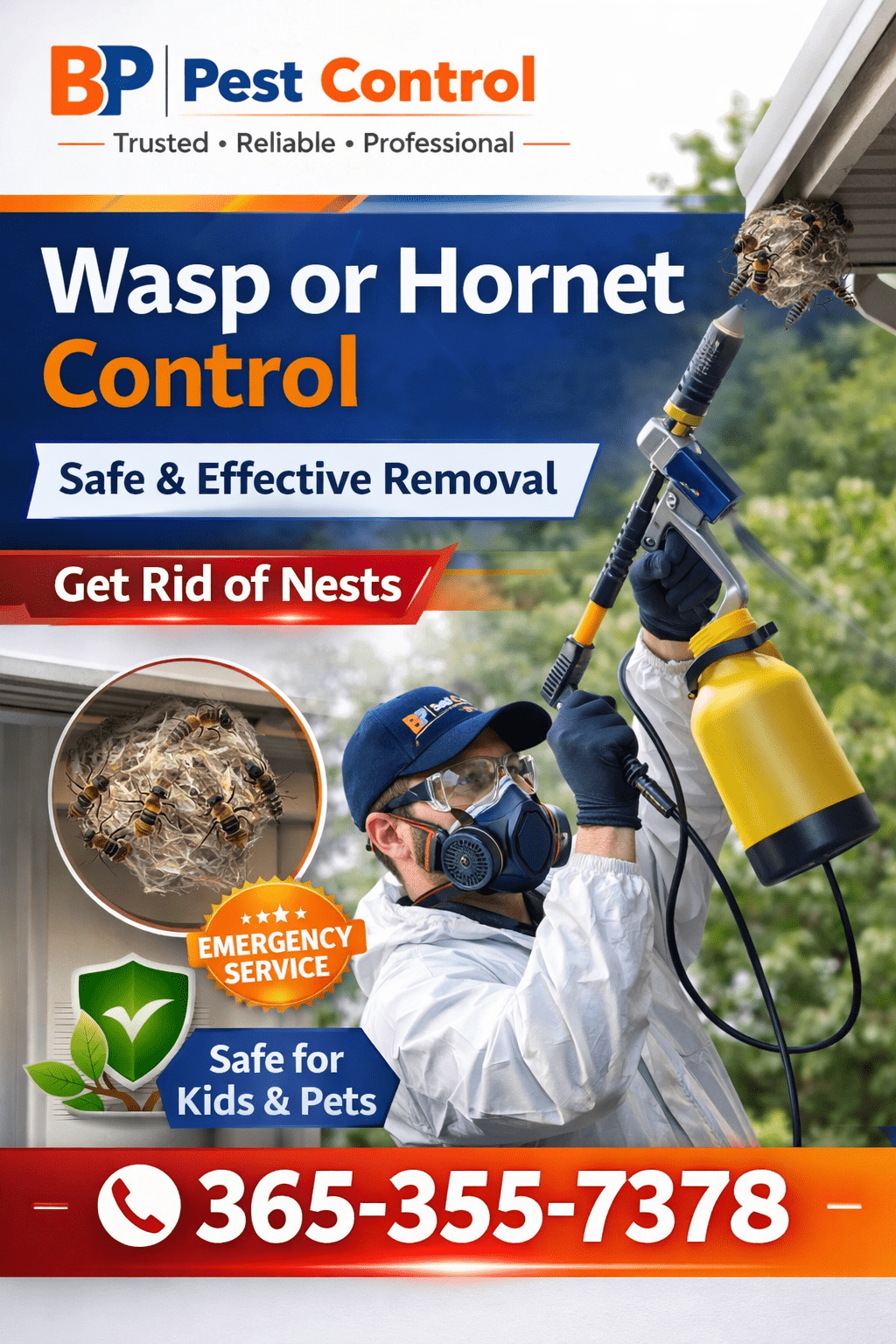
BP Pest Control provides pest management services for residential and commercial properties throughout the Durham Region and GTA. The company focuses on identifying the source of wasp activity and selecting an appropriate treatment approach based on the location and accessibility of the nest.
What Is a Wasp Nest in Soffit?
A wasp nest in soffit is a nest established in or around the soffit system beneath the edge of a roof. The soffit is the underside section of the roof overhang, and it commonly contains ventilation openings or connects to other roof and attic spaces.
Wasps may find soffits attractive because these areas can provide shelter from rain, wind, direct exposure, and some predators. Depending on the species, a colony may establish a nest behind a soffit panel or use an opening to access a protected cavity.
Why Soffits Can Attract Wasps
A soffit can offer several conditions that make it suitable for nesting. Small gaps, protected cavities, ventilation areas, and connections to roof structures can give wasps access to relatively undisturbed spaces.
Once a colony establishes itself, workers may repeatedly travel between the nest and outdoor areas. This can create a noticeable flight path near the side of a home even when the actual nest cannot be seen.
Why the Nest May Not Be Visible
One of the biggest challenges with a wasp nest in soffit is that the visible wasps may only reveal the entrance rather than the actual nest.
You may see several wasps entering a small opening beneath the roofline without seeing any nest material. The colony may be positioned behind the soffit or deeper inside a connected cavity.
This is why simply sealing the visible opening can be problematic when an active colony is still present. Proper identification and treatment should be considered before exclusion work is completed.
7 Trusted Treatment Options for a Wasp Nest in Soffit
There is no single treatment approach that is appropriate for every wasp nest in soffit. The correct method depends on the wasp species, nest location, accessibility, colony activity, and construction of the property.
1. Professional Inspection of the Soffit Area
The first step in dealing with a wasp nest in soffit is identifying where the wasps are actually entering and leaving.
A professional inspection can focus on areas such as soffit seams, ventilation openings, fascia connections, roof edges, eaves, attic vents, and other potential entry points.
For homeowners who are unsure whether the activity is coming from the soffit, a professional pest control inspection can help determine the likely source.
2. Targeted Wasp Nest Treatment
When an active wasp nest in soffit is identified, treatment can be directed toward the nesting area rather than simply treating random locations around the property.
Targeted treatment is important because spraying visible wasps outside does not necessarily address the colony. The objective of professional pest management is to address the source of the activity while minimizing unnecessary treatment of surrounding areas.
Treatment methods should always be selected according to the pest species, nest location, property conditions, and applicable product-label requirements.
3. Treatment Around the Wasp Entry Point
In some situations, the most useful treatment area is associated with the opening that wasps are using to access the soffit cavity.
A wasp nest in soffit may have a relatively small entrance, making it difficult for homeowners to determine how large the hidden nesting area is.
A professional can assess the entry point and determine whether treatment should be directed toward that location or whether additional inspection is required.
4. Accessing Concealed Nesting Areas
Some soffit structures allow access to concealed cavities, while others are difficult to open without potentially damaging the property.
If the colony is located behind a panel or inside a connected roof cavity, treatment may require a more careful approach. The goal is to manage the wasp activity without unnecessarily damaging soffit materials.
Homeowners should avoid removing soffit panels themselves when they suspect an active wasp nest in soffit. Disturbing the nest can cause wasps to become defensive.
5. Monitoring Wasp Activity After Treatment
Treatment does not mean that every wasp will disappear immediately. Individual workers may remain active for some time after the colony has been treated.
Monitoring the area after addressing a wasp nest in soffit can help determine whether activity is decreasing.
If wasps continue entering and leaving from the same opening, additional assessment may be necessary to determine whether the original nesting area was fully addressed or whether another colony is present.
6. Identifying and Addressing Entry Points
Once a wasp nest in soffit has been properly dealt with, identifying potential entry points can help reduce the likelihood of future nesting in vulnerable areas.
Potential areas to inspect include gaps around soffit panels, roofline intersections, vents, fascia, utility penetrations, and other openings.
However, sealing an active nest entrance before the colony has been appropriately treated can create additional problems. Exclusion should be considered as part of a complete pest management approach rather than as the first response to visible wasp activity.
7. Preventative Pest Management
After dealing with a wasp nest in soffit, preventative measures can help reduce conditions that may encourage future pest activity.
Preventative pest management may include inspecting exterior areas, identifying structural openings, improving sanitation, addressing attractants, and monitoring areas where previous nesting occurred.
BP Pest Control also provides preventative pest control treatments designed to help property owners reduce recurring pest problems.
Signs You May Have a Wasp Nest in Soffit
Because a wasp nest in soffit can remain hidden, homeowners often discover the problem by noticing changes in wasp activity rather than seeing the nest itself.
Repeated Wasp Traffic
If wasps repeatedly fly toward the same point along the roofline, there may be a nesting site nearby.
Pay particular attention when wasps consistently enter the same small opening beneath the eaves or soffit.
Wasps Appearing Inside the Home
Occasionally, wasps associated with a wasp nest in soffit may find their way into an attic or interior space through connected gaps.
Seeing occasional wasps indoors does not automatically prove there is a nest inside the soffit, but repeated activity near windows, ceilings, attic areas, or upper floors can justify further investigation.
Buzzing Near the Roofline
A persistent buzzing sound near a soffit, wall cavity, attic, or roof edge can sometimes indicate nesting activity.
However, sound alone is not enough to identify a wasp nest in soffit. A professional inspection can help determine whether the activity is actually associated with wasps and where the source may be located.
Multiple Wasps Around One Area
One or two wasps flying around a property may simply be foraging. A concentrated number of wasps repeatedly appearing around the same structural area is more concerning.
When activity is consistently concentrated around a soffit opening, the possibility of a wasp nest in soffit becomes more significant.
Why Wasps Build Nests in Soffits
Wasps select nesting locations based on shelter, accessibility, environmental conditions, and the needs of the colony. Soffits can provide protection while remaining close to outdoor food and water sources.
Protection From Weather
The underside of a roof provides protection from heavy rain and direct sunlight. This can make soffits attractive nesting locations for certain wasp species.
Limited Disturbance
Many homeowners rarely inspect the underside of their roofline closely. A hidden wasp nest in soffit may therefore remain undisturbed until wasp activity becomes obvious.
Easy Access to Outdoor Areas
Wasps nesting around a soffit can quickly travel outside to forage. A small gap may provide enough access for workers to move between the nesting area and the exterior.
Connected Roof and Attic Spaces
Soffits can connect with other areas of the roof structure. Depending on the construction of the property, wasps may gain access to cavities that are difficult to see from outside.
Is a Wasp Nest in Soffit Dangerous?
A wasp nest in soffit should be treated with caution, particularly when the nest is active and located close to doors, windows, walkways, patios, decks, or other frequently used areas.
Wasps can become defensive when they perceive a threat to their nest. Disturbing the nesting area, hitting the soffit, blocking the entrance, or attempting to remove the nest without appropriate precautions can increase defensive activity.
People with known severe reactions to insect stings should take particular care around active nests and avoid attempting DIY removal.
Do Not Hit or Shake the Soffit
If you suspect a wasp nest in soffit, avoid hitting the soffit or attempting to shake the nesting area.
Do Not Stand Directly Beneath the Activity
If wasps are repeatedly entering an opening above you, avoid standing directly beneath the area while investigating.
Do Not Block an Active Entrance Immediately
Blocking an active entrance before the colony has been treated can potentially cause wasps to search for another route, including routes toward interior spaces.
Wasp Nest in Soffit vs Wasp Nest in Roof
A wasp nest in soffit and a wasp nest in a roof cavity can produce similar signs because these structures can be connected.
Homeowners may notice wasps entering beneath the roofline even when the actual nest is positioned farther inside the structure.
If the activity appears to originate around the roofline, it can be useful to consider both the soffit and surrounding roof areas during inspection.
For related information, homeowners can also learn about rodent control, general pest control services, and other pest management options available for residential properties.
DIY Wasp Nest in Soffit Removal
Searching online for DIY solutions is common when homeowners discover a wasp nest in soffit. However, concealed nests present additional challenges compared with an exposed nest that is clearly visible.
Why DIY Treatment Can Be Difficult
The first challenge is determining exactly where the colony is located. A visible opening may not reveal the size or position of the nest.
The second challenge is safe access. Soffits are often located several feet above ground and may require ladders to inspect. Working from a ladder while dealing with defensive insects can create additional risks.
The third challenge is choosing the correct treatment approach. Different wasp species and nesting situations may require different management strategies.
For these reasons, professional assessment is often preferable when a wasp nest in soffit is active or concealed.
When to Call a Professional for a Wasp Nest in Soffit
Professional pest control can be particularly useful when the nest is concealed, difficult to access, close to an entrance, or producing significant wasp activity.
Call for Professional Help When the Nest Is Hidden
If you can see wasps entering a soffit but cannot locate the nest, avoid opening the structure yourself.
Call When Wasps Are Entering the Home
Repeated indoor wasp activity may indicate that the exterior nesting area is connected to an interior cavity.
Call When Activity Is Increasing
If the number of wasps around a wasp nest in soffit appears to be increasing, professional assessment can help determine the appropriate next step.
Call When the Nest Is Near High-Traffic Areas
Soffits above front doors, patios, decks, garages, or walkways can place an active colony close to people.
Wasp Nest in Soffit Prevention Tips
After dealing with a wasp nest in soffit, prevention should focus on reducing opportunities for future nesting.
Inspect Soffits and Roof Edges
Regularly look for damaged panels, gaps, loose sections, and openings around the roofline.
Check Exterior Vents
Vents and other openings should be inspected periodically to ensure they are properly protected and maintained.
Maintain the Roofline
Damaged fascia, soffit materials, roof edges, and other structural areas can create opportunities for insects to enter protected spaces.
Reduce Outdoor Attractants
Keep garbage containers properly closed, clean up food spills, manage sugary outdoor residues, and avoid leaving attractive food sources exposed.
Monitor Previous Nesting Locations
If your property previously had a wasp nest in soffit, pay attention to the same area during future wasp seasons.
Wasp Nest in Soffit in Oshawa and Durham Region
Homeowners in Oshawa and surrounding Durham Region communities may encounter wasp activity around soffits, eaves, garages, decks, sheds, rooflines, and other sheltered structures.
A wasp nest in soffit can be particularly difficult to identify from ground level because the nest may be concealed behind exterior materials.
BP Pest Control serves homeowners and businesses throughout the local area with pest management services. If you are dealing with wasps around your property, a professional assessment can help identify the source and determine an appropriate treatment strategy.
For homeowners seeking pest management for residential properties, the residential pest control service page provides additional information about available services.
Wasp Nest in Soffit in Whitby, Ajax, Pickering and Courtice
A wasp nest in soffit is not limited to one type of property or one community. Homes throughout Whitby, Ajax, Pickering, Courtice, Bowmanville, Clarington, and nearby communities can have roofline areas that provide suitable shelter for wasps.
Older properties may have different soffit and fascia designs than newer homes, while renovations can create additional connections between exterior cavities and roof spaces.
Because construction varies from property to property, identifying the exact location of a wasp nest in soffit is an important part of selecting an appropriate treatment approach.
How BP Pest Control Approaches a Wasp Nest in Soffit
When homeowners contact BP Pest Control about a wasp nest in soffit, the important first step is understanding the location and nature of the activity.
Identify the Wasp Activity
The type of wasp and its behaviour can provide useful information about the nesting situation.
Locate the Likely Entry Point
Repeated flight paths can help identify where wasps are entering the structure.
Assess the Surrounding Structure
The soffit, fascia, roof edge, vents, attic connections, and nearby areas may need to be considered.
Select an Appropriate Treatment
The treatment strategy should be based on the specific nesting conditions rather than assuming every wasp nest in soffit can be handled in exactly the same way.
Consider Prevention
After the active issue has been addressed, potential entry points and other contributing conditions can be evaluated.
Other Pest Problems That Can Occur Around Homes
Although a wasp nest in soffit is a common concern during periods of wasp activity, homeowners may encounter many other pest issues around residential properties.
BP Pest Control provides services related to ants, rodents, bed bugs, cockroaches, spiders, mosquitoes, wasps, and other common pest problems.
Homeowners can explore the main BP Pest Control website for information about pest management services and local service areas.
Frequently Asked Questions About a Wasp Nest in Soffit
How do I know if I have a wasp nest in soffit?
Repeated wasp activity around the same soffit opening, wasps entering and leaving a roofline gap, buzzing near the soffit, or increasing wasp activity around the eaves may indicate a wasp nest in soffit. However, visible wasps do not always reveal the exact location of the nest.
Can wasps build a nest behind a soffit?
Yes. Depending on the species and structure, wasps can establish nests in protected cavities behind or around soffit materials. This can make the nest difficult to see from outside.
Should I remove the soffit panel to find the nest?
It is generally better not to remove or disturb a soffit panel when an active wasp nest in soffit is suspected. Opening a concealed nest can trigger defensive wasp activity and may also damage the structure.
Can I seal the soffit opening?
Sealing an opening may be part of prevention after the active colony has been appropriately addressed. Blocking an active wasp nest in soffit entrance before treatment can create additional problems if wasps remain inside.
Why are wasps entering the soffit?
Wasps may use soffits because they can provide sheltered nesting locations and convenient access to outdoor areas. Small gaps around roof edges, vents, and soffit panels can provide entry points.
Can a wasp nest in soffit spread into the attic?
It can depend on the construction of the property and how the soffit connects with attic or roof cavities. If wasps are repeatedly appearing inside the attic or upper levels of the home, further inspection may be appropriate.
Is a wasp nest in soffit more difficult to treat than an exposed nest?
A concealed wasp nest in soffit can be more challenging because the nest may not be directly visible or accessible. Treatment should therefore take the structure and nest location into account.
When should I contact BP Pest Control?
If you repeatedly see wasps entering a soffit opening, have increasing wasp activity around the roofline, or suspect a hidden colony, contacting BP Pest Control for professional pest management information can help you determine the appropriate next step.
Final Thoughts on Wasp Nest in Soffit
A wasp nest in soffit can be easy to overlook because the colony may be concealed behind panels or inside a roofline cavity. Instead of focusing only on the wasps that you can see, it is important to consider where they are entering, where the nest may be located, and whether the activity is connected to another part of the structure.
A wasp nest in soffit should be approached carefully because disturbing an active colony can result in defensive behaviour. Homeowners should avoid hitting the soffit, opening concealed cavities, or immediately sealing an active entrance without understanding the situation.
Professional inspection and targeted treatment can help identify the source of wasp activity while reducing unnecessary disturbance to the property. After treatment, inspecting potential entry points and maintaining the roofline can also help reduce the chance of another wasp nest in soffit developing in the future.
BP Pest Control serves homeowners and businesses across Oshawa, Durham Region, and surrounding GTA communities. The company has more than 20 years of experience in pest control and is known for its 5-star-rated service reputation. For more information, visit the BP Pest Control website or review the company’s Google Business Profile search results.
If you are seeing wasps repeatedly entering a soffit opening, treating the visible wasps alone may not address the underlying problem. Identifying the source of the activity is the first step toward managing a wasp nest in soffit effectively and safely.